The first chapters of a 600-page novel pull you in. Several days later, the bookmark seems barely to have moved. New characters arrive, subplots multiply, and hundreds of pages remain. You start wondering whether you will ever finish.
Learning how to read long books is less about speed than staying connected across many sessions. Choose a book you want to return to, divide it into manageable sections, and keep a short reminder of where you stopped. A flexible plan is more useful than a deadline that makes every chapter feel overdue.
This guide focuses on that extended journey: practical strategies, a sample progress plan, and a way to restart when momentum fades. Reading is not a competition, and finishing is not the only acceptable outcome.
What Counts as a Long Book?
There is no universal cutoff. Around 400 pages may feel substantial to one reader; another regularly chooses novels over 700 pages. Page counts also change between formats and editions.
Consider writing density, the size of the cast, complex timelines, world-building, genre, familiarity, and reading format. A shorter academic or literary text can demand more attention than a longer, straightforward novel. Length tells you something about the commitment, but little about whether you will enjoy making it.
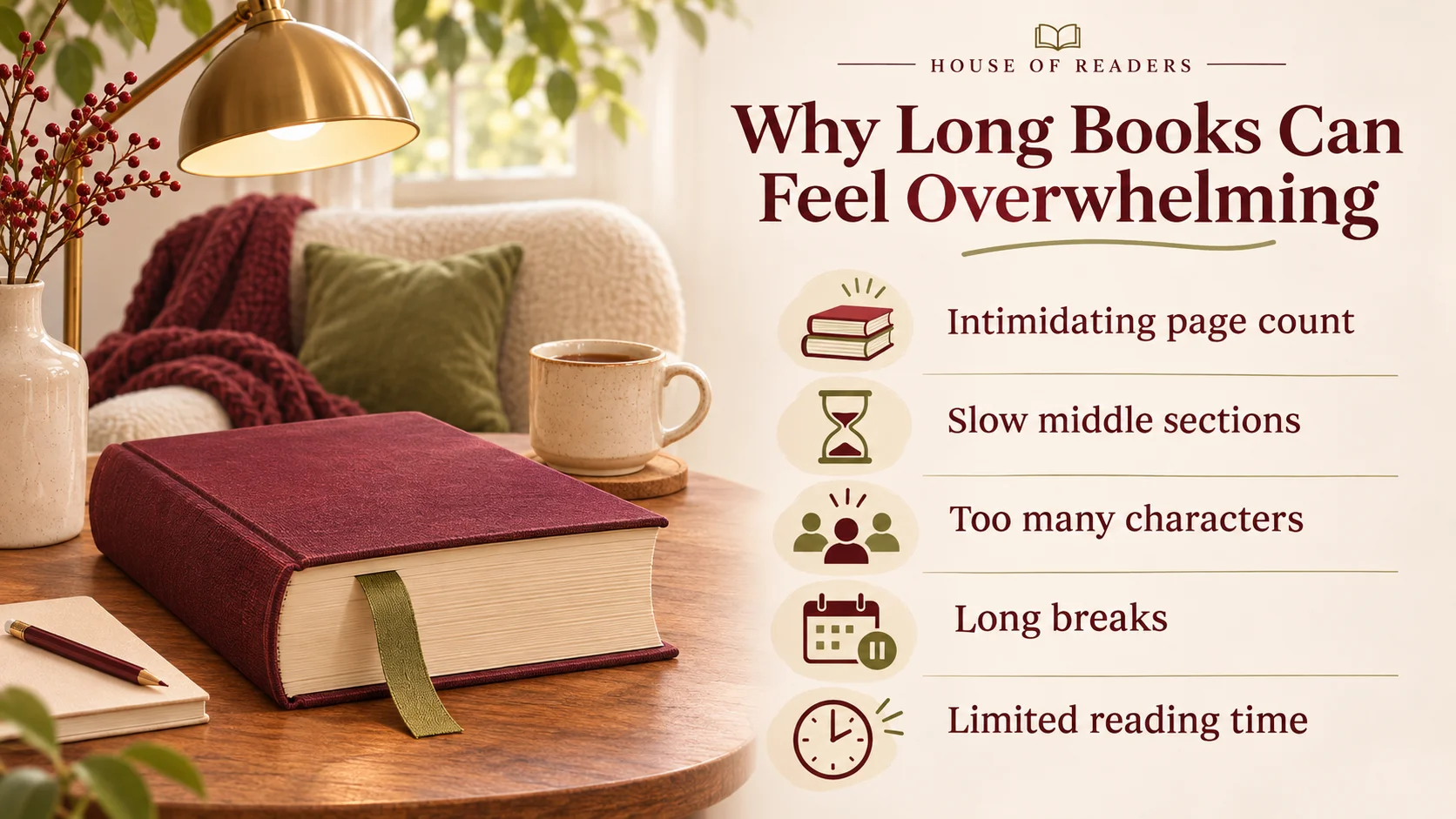
Why Long Books Can Be Difficult to Finish
The challenge often comes from carrying a story through an extended stretch of everyday life. Several practical difficulties can overlap:
- The remaining pages look more noticeable than the progress already made.
- A slower stretch changes the excitement of the opening.
- Several storylines compete for attention between sessions.
- A long break makes names and relationships feel unfamiliar.
- External goals turn a pleasurable read into unfinished business.
- Unpredictable free time makes a rigid plan difficult to follow.
Not every long book presents these problems. Identify the difficulty you actually have before changing your approach.
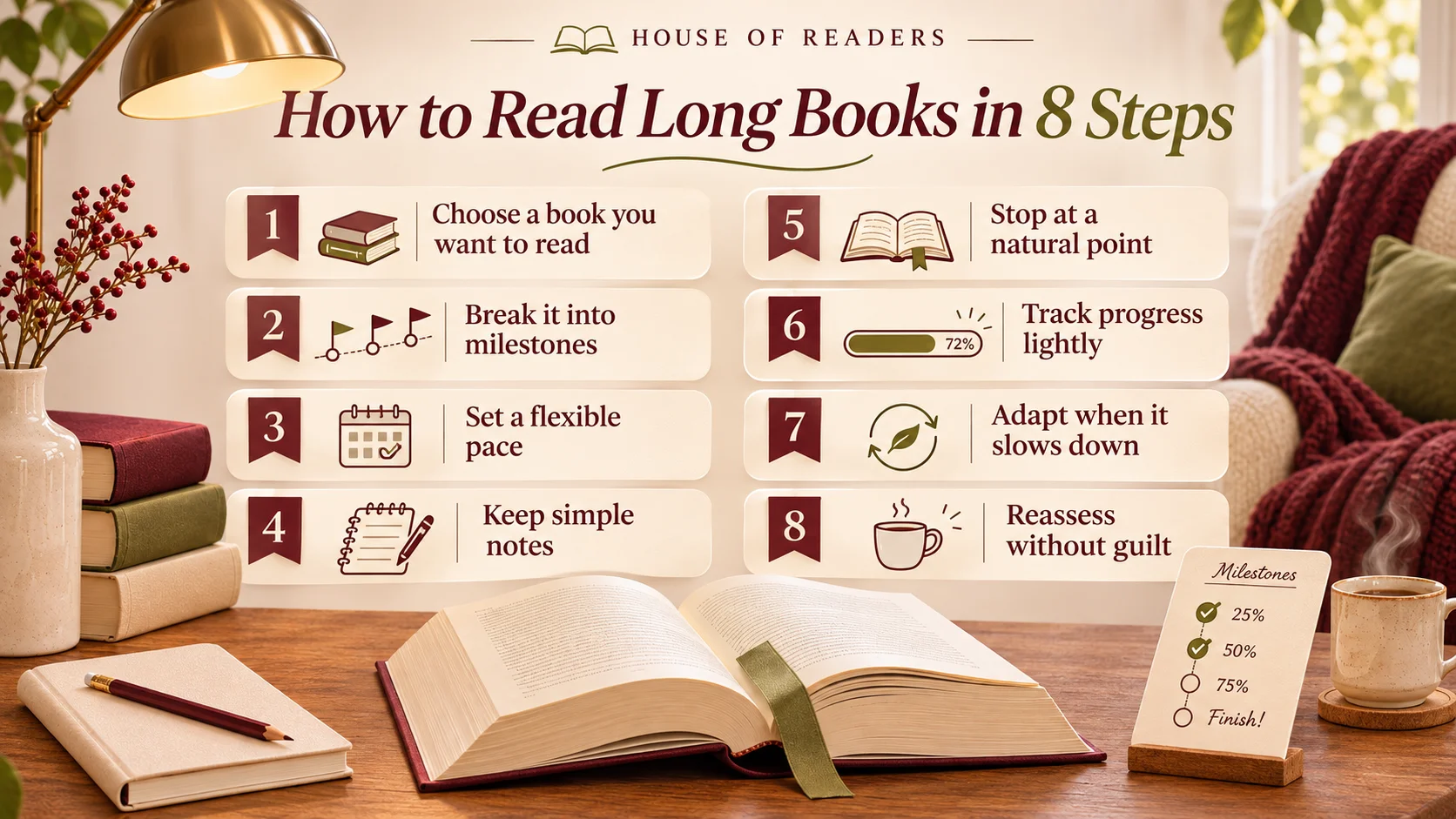
How to Read Long Books in 8 Practical Steps
Step 1: Choose a Long Book You Actually Want to Read
Try the opening and notice whether you enjoy the voice, premise, and genre. Ask whether curiosity or obligation is driving the choice, and whether the book fits your current mood. Reputation cannot supply interest for you.
You do not owe a classic or a popular recommendation a place in your schedule. If the prospect of spending weeks with this story feels appealing, that is a better starting point than wanting to tick off its title.
Step 2: Break the Book Into Smaller Milestones
Use chapters, parts, natural story arcs, or optional page ranges. A 600-page book could become six milestones of roughly 100 pages. Your immediate aim is then the end of the current section, not the final page.
Move the boundary to a convenient chapter ending. Milestones should help you choose the next manageable stretch, not require you to stop halfway through an interesting scene.
Step 3: Set a Flexible Reading Pace
Choose a rhythm that suits this particular book: one chapter, an illustrative 15–25-minute session, a few evenings each week, or a natural scene break. None is a required minimum.
Try the approach before setting expectations for the whole book. Dense passages may take longer; an absorbing section may keep you reading. Some days you will read more, less, or nothing. Resume without adding missed pages as a debt.
Step 4: Keep a Simple Character and Plot Reference
For a complicated cast, note main names, relationships, locations, ongoing storylines, and the last significant development. Keep only what you need to re-enter the current story.
Clearly fictional example: “Mira: mapmaker; searching for her brother. Tomas: harbor keeper; has the missing departure record.” That is enough to restore two useful connections. You do not need a chapter-by-chapter account.
Step 5: Stop at a Natural Point
A chapter ending or meaningful scene transition gives you a convenient place to pause. If a page target lands in the middle of a conversation, finish the scene when you have time.
Before closing the book, locate the next starting point and optionally leave a few words about the unresolved situation. This is a practical way to make returning less awkward, not a claim about a proven memory effect.
Step 6: Track Progress Without Obsessing Over Numbers
Choose one signal: a bookmark, chapter checklist, milestone tracker, journal note, or percentage if your format provides one. You do not need all five.
Check progress when it helps, perhaps at the end of a part. If percentages make every session feel insufficient, put the tracker aside and follow chapters instead. Enjoying a significant scene counts even when the bookmark moves only a little.
Step 7: Adapt When the Book Slows Down
Ask what the current section is developing: a relationship, setting, conflict, or change in perspective. Try a shorter session, recall the immediate story objective, or read a chapter without timing it.
Do not skip important material merely to increase your page count. If a brief pause sounds more appealing than another forced session, take one and leave a clear return note.
Step 8: Reassess Your Interest Without Guilt
Separate difficulty restarting from not wanting to know what happens. You can continue, pause, return later, try another format, or stop entirely. The time already spent does not obligate you to spend more.
A Realistic Reading Plan for a 600-Page Book
This is a hypothetical 600-page book, not a promise about any published novel. The table divides its length by an average page target. These are optional examples, not recommended minimums.
| Approach | Average pages per reading day | Approximate reading days |
|---|---|---|
| Small page-based target | 10 | 60 |
| Moderate page-based target | 15 | 40 |
| Larger page-based target | 20 | 30 |
| Larger page-based target | 25 | 24 |
Reading days are not necessarily consecutive calendar days. Reading on three evenings each week spreads those sessions over more calendar time. Targets can change, and rereading or unusually dense chapters can change the plan.
Alternatively, ignore dates and use six milestones:
- Pages 1–100
- Pages 101–200
- Pages 201–300
- Pages 301–400
- Pages 401–500
- Pages 501–600
Actual chapter and part divisions may be preferable. For a different edition or an audiobook, use the equivalent section rather than trying to match page numbers. Our reading-time guide explores broader planning questions.
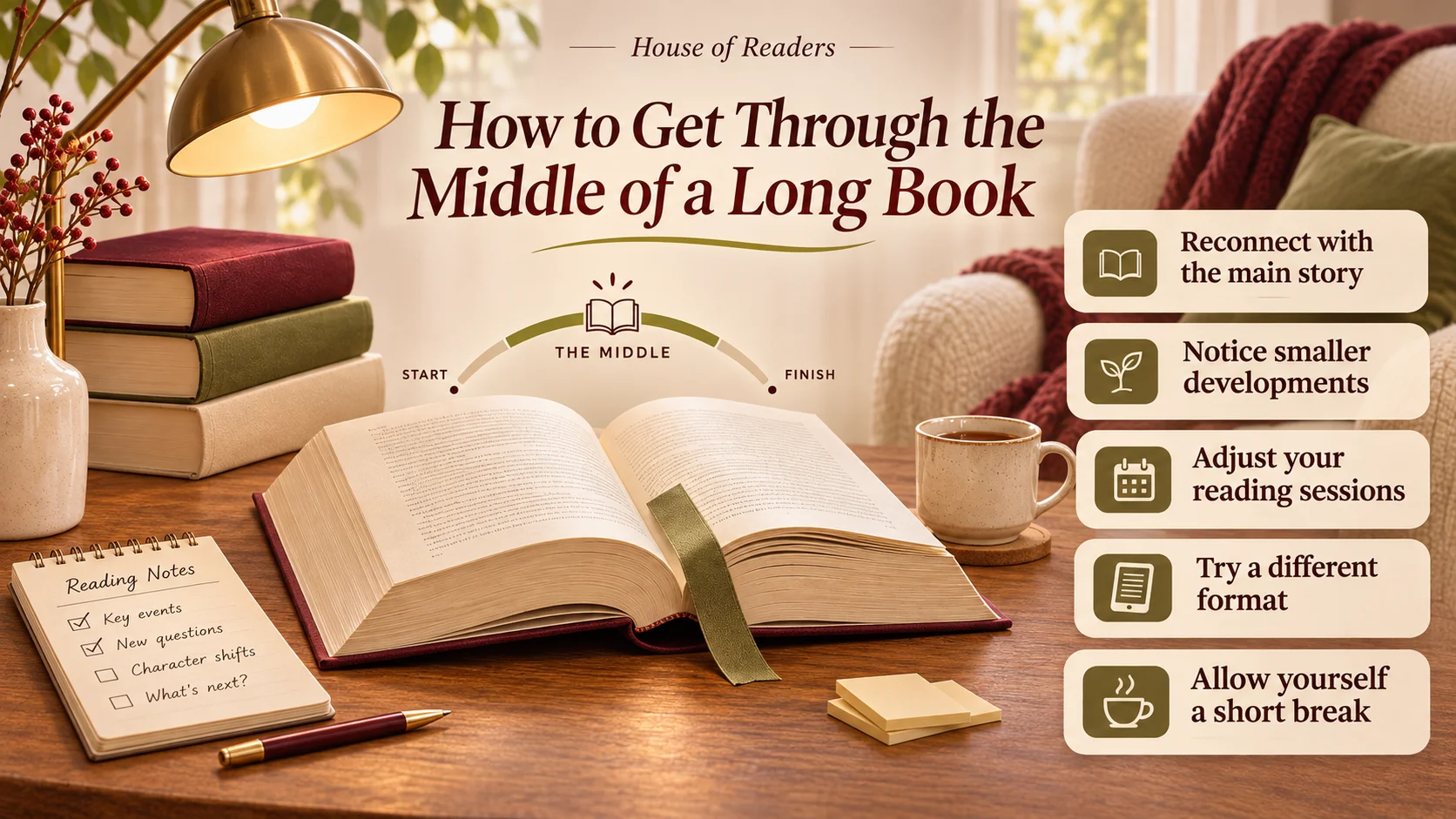
How to Stay Interested During the Middle of a Long Book
Reconnect With the Main Story
Recall the promise that drew you in. What does the central character want now, and what is preventing it? Focus on the current question rather than demanding the opening’s excitement from every chapter.
Pay Attention to Smaller Developments
Notice a changed alliance, a newly important place, or a decision a character would not have made earlier. Movement can occur without a major revelation.
Adjust Your Reading Sessions
If a long session feels heavy, read a shorter scene. If brief sessions make a complex chapter feel fragmented, try an uninterrupted stretch when time allows.
Consider a Different Reading Format
Print, ebooks, and audiobooks may suit different circumstances. When switching, check the edition and find the same scene or chapter; percentages and page numbers may not align.
Allow Yourself a Short Break
A pause does not erase the pages already read. Leave your position and one current story question somewhere easy to find, so the break has a practical route back.
How to Keep Track of Characters and Subplots
Fantasy, historical fiction, and multiple-perspective novels can introduce names faster than you want to memorize them. Record only characters and threads that affect your current understanding. Add an entry when you need it, not every time a name appears.
Minimal reference:
Character:
Role:
Connection:
Current Goal or Conflict:
Main Storyline:
Important Secondary Storyline:
Last Event I Remember:
Clearly fictional example:
Character: Mira
Role: Mapmaker
Connection: Sister of missing sailor Ren
Current Goal or Conflict: Find the harbor’s departure record
Main Storyline: Mira is tracing Ren’s route
Important Secondary Storyline: Tomas risks his job by helping
Last Event I Remember: A ledger page was missing
Keep the reference limited to what you have read. An online character list may reveal a later identity or relationship. Notes are optional; a journal is useful only if maintaining it feels worthwhile. For broader recall ideas, see How to Remember What You Read.
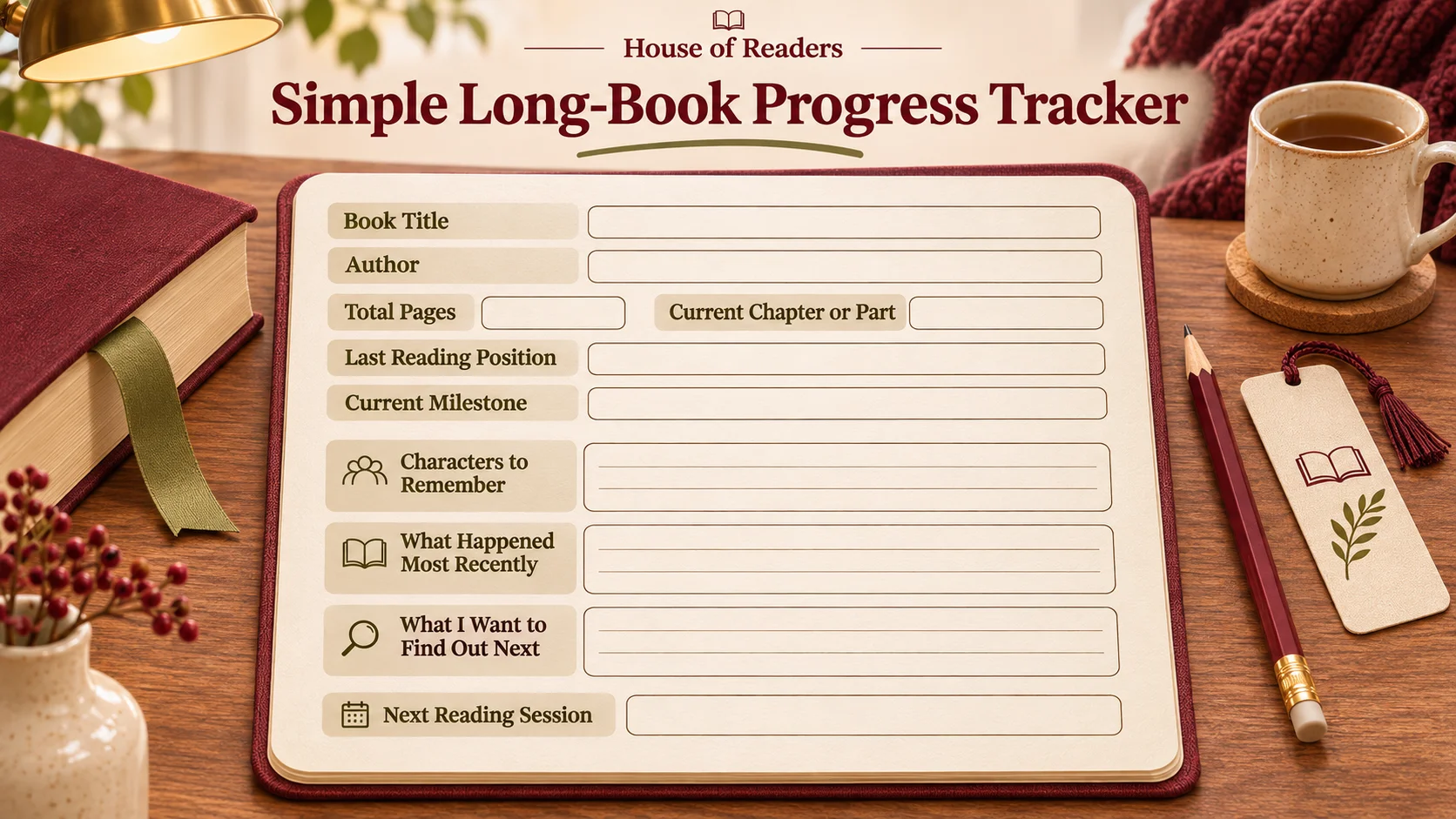
A Simple Long-Book Progress Tracker
Copy this into a notebook or plain-text note. Fill only the fields you need, and update it at a milestone or before a longer pause.
Book Title:
Author:
Total Pages:
Current Chapter or Part:
Last Reading Position:
Current Milestone:
Characters to Remember:
What Happened Most Recently:
What I Want to Find Out Next:
Next Reading Session:
How to Start Reading Again After a Long Break
You may need to restore your place in the story, not restart the whole book. Try this focused recovery:
- Return to the last chapter you completed and confirm your bookmark position.
- Reread its final few pages if the situation feels unfamiliar.
- Check any short notes or character references.
- Identify the current storyline and the question still unresolved.
- Resume with a small session, then decide whether you want to continue.
Without notes, skim your own earlier chapters for the relevant scene. A trustworthy recap may help only if it clearly stops at your current position. Online summaries can disclose later events, so avoid ending explanations and unrestricted character searches.
Should You Read Multiple Books While Finishing a Long Novel?
A short or lighter book can offer variety when your mood changes. A different format may also fit time that is inconvenient for your main novel. Other readers find that switching makes both storylines harder to follow.
Try a pairing only if it helps: for example, a long novel alongside essays rather than two sprawling casts. If you repeatedly forget which events belong to which book, return to one main story. A dedicated guide to reading multiple books is planned for December 1, 2026; it is not linked here before publication.
When Should You Stop Reading a Long Book?
| Situation | What it may look like | Possible next action |
|---|---|---|
| Temporary slowdown | You still care about the characters, but reading has become slow. | Reduce the session size or refresh the current storyline. |
| Temporary mismatch | The premise appeals, but its tone or complexity does not suit your current mood. | Pause with a return note, or try another format. |
| Genuine disinterest | Even after refreshing the story, you do not want to continue. | Stop and choose something else without a required completion percentage. |
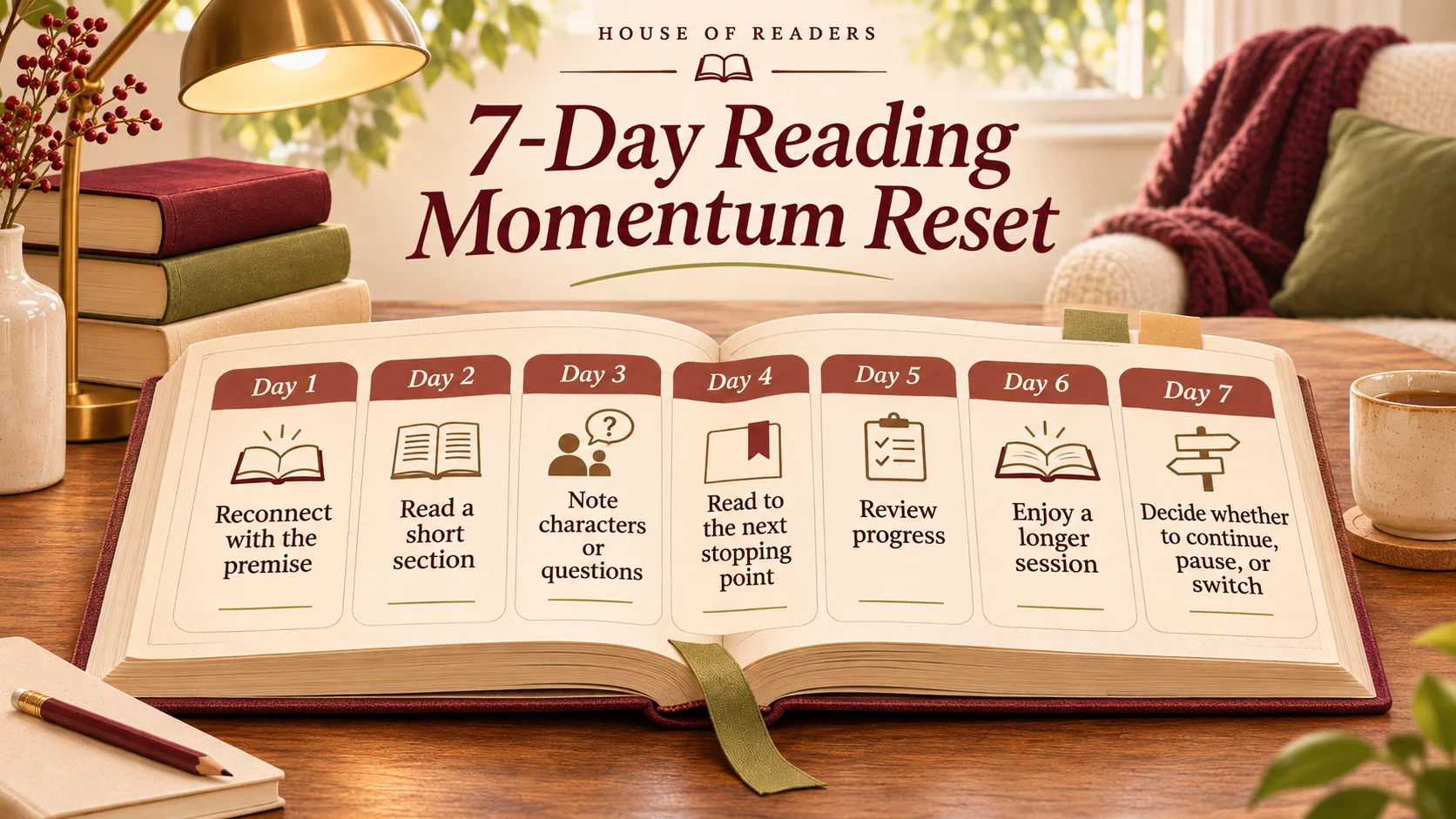
A 7-Day Momentum Reset for Long Books
Use these seven days as an illustrative sequence. You do not have to read daily or finish the sequence within one week. The aim is familiarity and enjoyment, not forced completion.
- Day 1: Reconnect with the premise and current storyline.
- Day 2: Read a short section without a page goal.
- Day 3: Note the main characters or unresolved questions you actually need.
- Day 4: Read to the next natural scene or chapter break.
- Day 5: Review what helped and adjust the approach.
- Day 6: Enjoy a longer session only if you want one.
- Day 7: Choose whether to continue, pause, or select another book.
If you still enjoy other books but not this one, that is useful information. If reading generally feels unappealing, our reading-slump guide addresses the broader difficulty.
Common Mistakes That Make Long Books Feel Harder
- Choosing fame over interest: Try the opening before committing to weeks of reading.
- Setting unrealistic deadlines: Test a comfortable pace before planning a finish date.
- Making each session a test: Ask whether the story held your interest, not how much you achieved.
- Trying to remember everything: Track current connections, not every passing detail.
- Comparing progress: Different editions, books, and circumstances make comparisons unhelpful.
- Overbuilding the tracker: Remove fields you never use.
- Forcing a book that no longer appeals: Reassess the choice instead of escalating the target.
- Treating slow chapters as failure: Notice what they develop before judging their pace.
Long Books vs Short Books: Is One Better?
Neither length is inherently superior. A long book may offer room for extensive world-building, multiple perspectives, or complex character development. A short book may deliver a concentrated narrative with a different rhythm and structure.
Quality depends on execution, not page count. You can enjoy both.
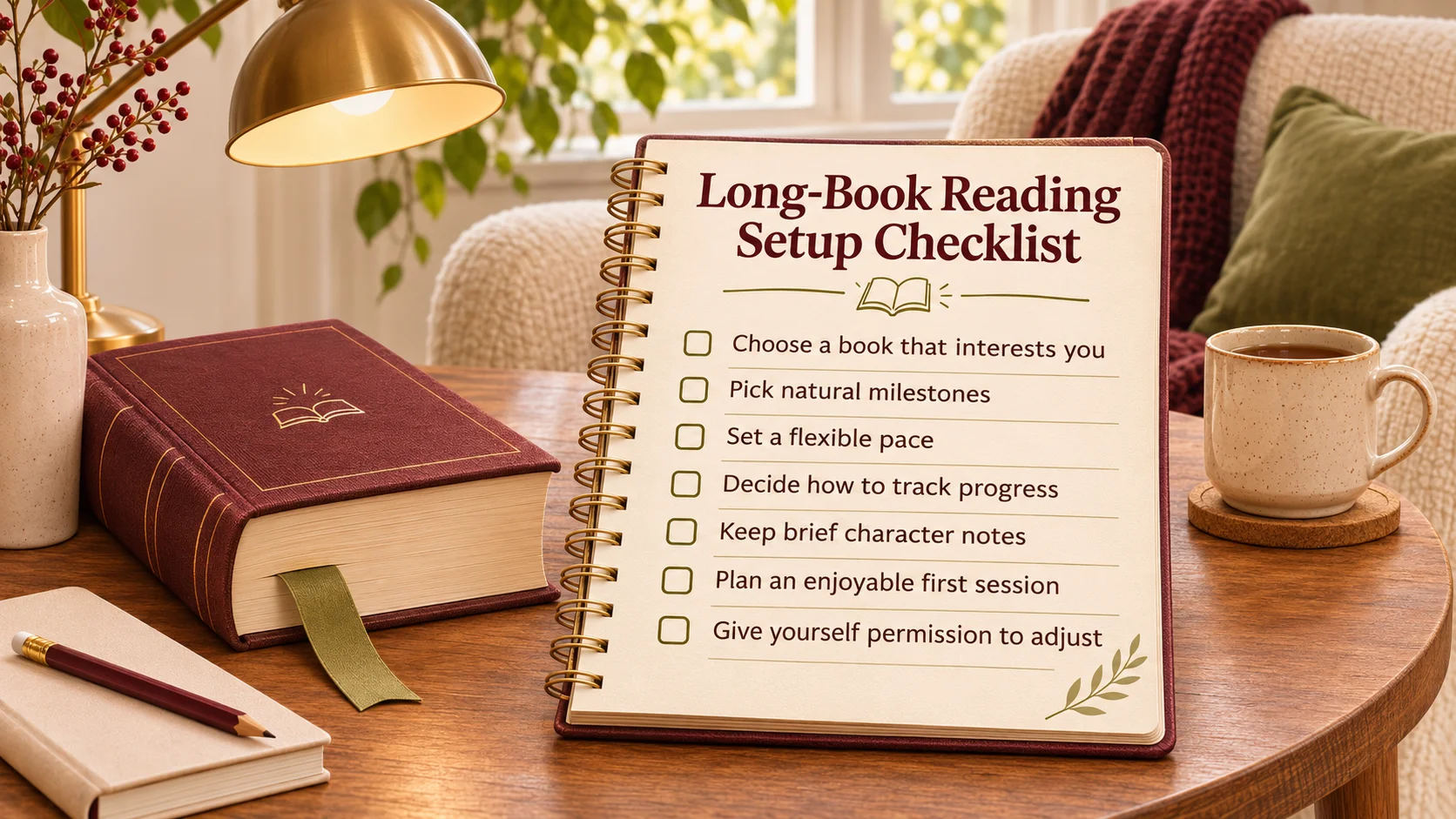
Your Next Long Book: A Simple Reading Setup
- Choose a book that genuinely interests you.
- Identify its natural chapters or parts.
- Select a flexible milestone.
- Decide where to track progress, if anywhere.
- Keep brief character notes only if needed.
- Choose an enjoyable first reading session.
- Give yourself permission to adjust the plan.
Final Thoughts
A long book becomes less intimidating when the immediate aim is the next enjoyable section rather than every page remaining. Manageable milestones, a flexible pace, and occasional short reminders can keep the story within reach across an extended read.
Change the pace when life changes. Take a break with a clear return point. Stop when the book no longer suits you. The purpose of learning how to finish long books is to make room for worthwhile reading, not to turn completion into an obligation.

Make Your Reading Time More Enjoyable
Whether you’re working through a long novel, rebuilding a reading habit, or deciding what to read next, explore our practical reading guides for ideas that fit your reading style.
Start with How to Build a Reading Habit That Lasts, use our reading-time guide for broader planning, or explore How to Remember What You Read for help revisiting important ideas.
Frequently Asked Questions
Reconnect with the current story question and notice smaller developments. Adjust session length, and reassess whether the book still interests you instead of forcing a page target.
There is no required daily amount. Choose a manageable chapter, time window, or optional page target, and change it when the book or your circumstances require.
Use chapters, parts, or natural story arcs. Page ranges can help, but moving a milestone to a convenient chapter ending is fine.
Keep a short list of important names, relationships, and current goals. Add only details you need to understand the ongoing story.
Decide whether you are temporarily tired, out of touch with the story, or genuinely uninterested. Refresh, pause, or stop accordingly.
Yes. Leave a bookmark and a short reminder of the current situation if useful. Taking a break does not invalidate your progress.
Revisit the last completed chapter, reread a few pages, and check brief notes. Use online recaps cautiously because they may reveal later events.
Only if switching suits you. A lighter companion read may offer variety, while another complex cast may make returning harder.
Yes. You can pause, return later, or stop entirely. No page-count threshold makes that decision more legitimate.