A group of old friends.
A remote estate in the Scottish Highlands.
New Year celebrations.
Years of buried resentment.
Then a blizzard cuts them off from the outside world and someone ends up dead.
Lucy Foley’s The Hunting Party takes the familiar idea of a reunion between longtime friends and slowly reveals how little some of them actually trust one another.
If you are wondering whether it is worth adding to your thriller list, this spoiler-light The Hunting Party review looks at the atmosphere, characters, pacing, mystery, twists, strengths, weaknesses, and who is most likely to enjoy it.
Quick Verdict
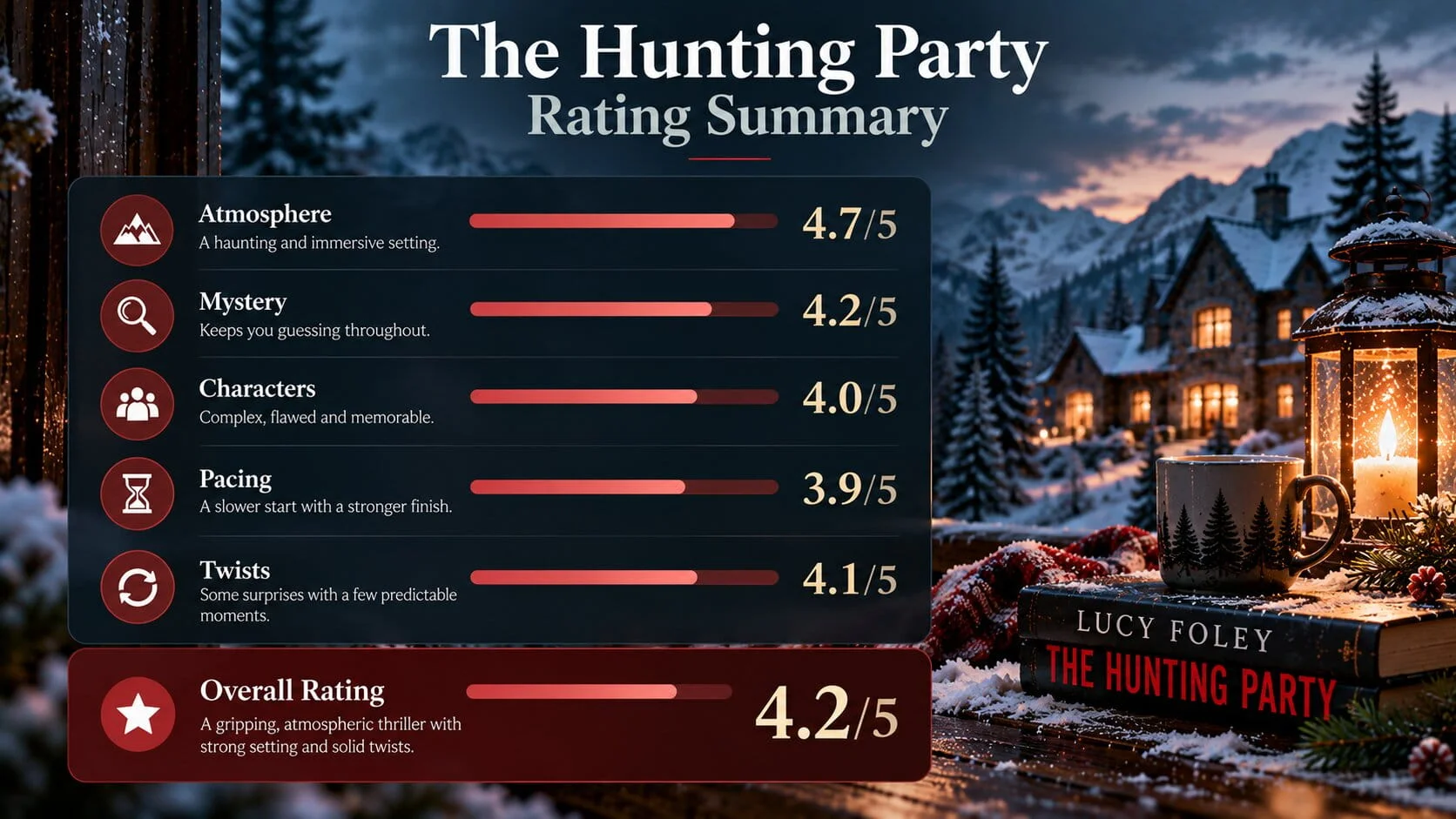
House of Readers Rating: 4.2/5
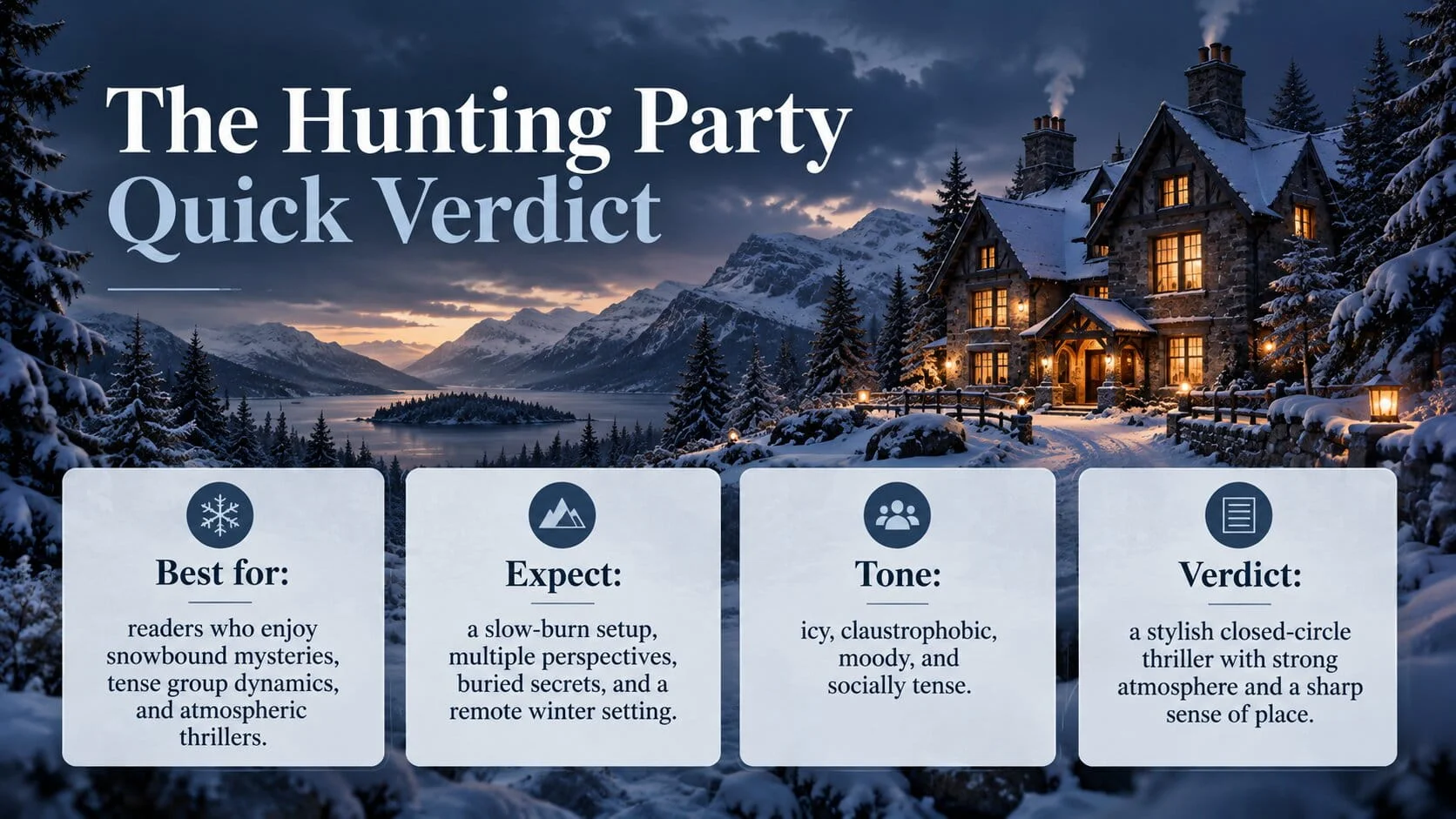
The Hunting Party is an atmospheric closed-circle mystery with a strong snowy setting, a tense friendship group, multiple perspectives, and a gradual build toward the truth.
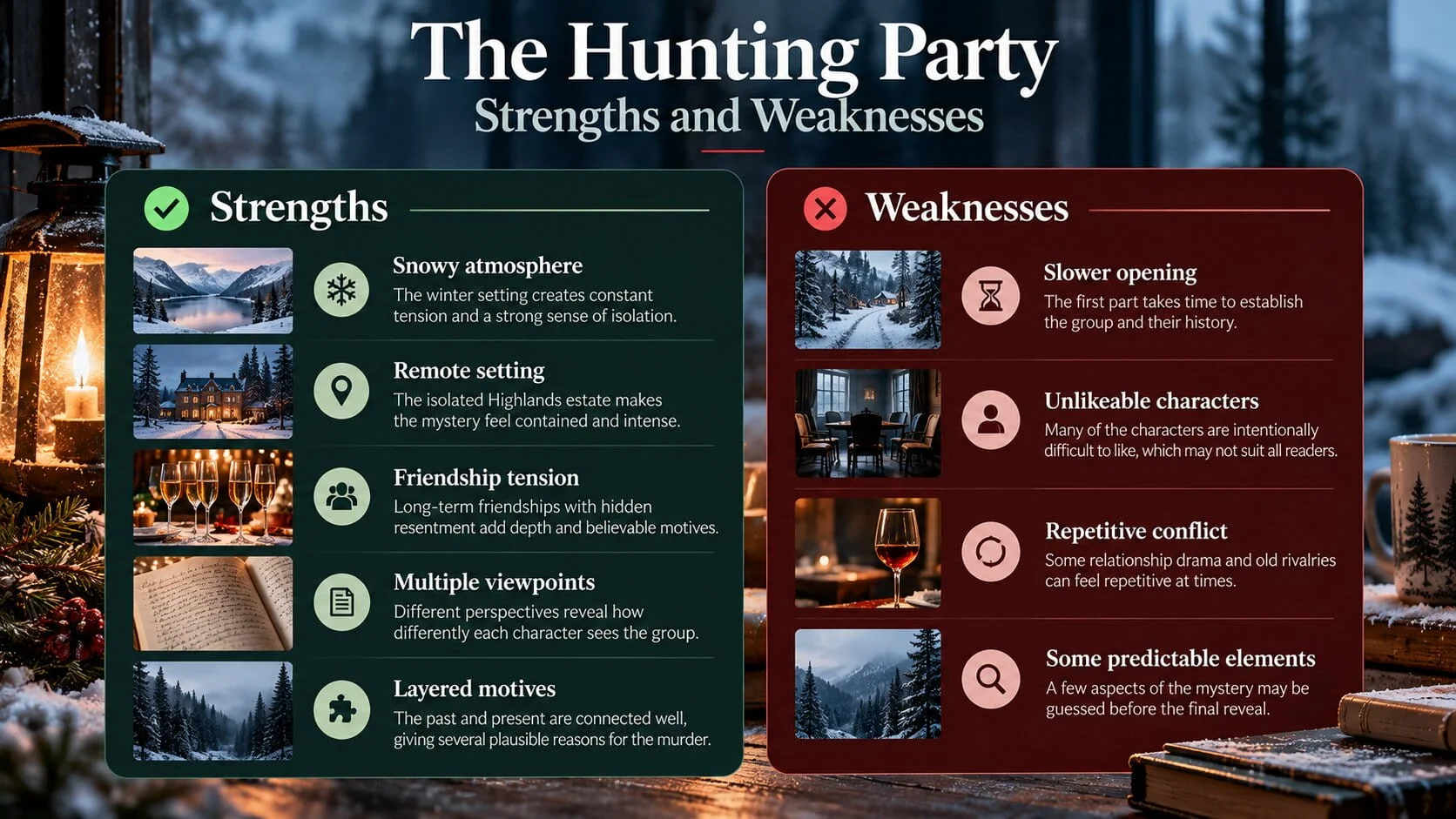
Its biggest strengths are:
- the isolated Scottish Highlands setting
- snowstorm atmosphere
- complicated long-term friendships
- multiple narrators
- hidden resentment
- steadily increasing suspicion
- a strong sense of being trapped
Its main weaknesses are:
- the opening takes time to establish the group
- several characters are intentionally difficult to like
- some relationship drama may feel repetitive
- readers wanting immediate action may find the first half slower
Overall, it works especially well for readers who enjoy snowbound mysteries, old-friend tension, remote settings, and stories where everyone seems capable of hiding something.
What Is The Hunting Party About?
A group of friends who met at Oxford continue a long-running tradition of spending New Year together.
This year, they travel to a remote estate in the Scottish Highlands.
At first, the trip looks exactly like the kind of luxury winter escape they planned.
There is champagne.
A beautiful lodge.
Snow-covered scenery.
Years of shared memories.
But the friendships are no longer as comfortable as they once were.
Some people have changed.
Some resentments have never disappeared.
Some secrets have been carried for years.
Then severe weather isolates the estate.
And one member of the group is found dead.
The mystery becomes more complicated because Foley does not immediately tell you everything about the victim, the killer, or the relationships inside the group.
Instead, the novel gradually reveals why these people may have more reasons to hurt one another than their friendship suggests.
The Scottish Highlands Setting Is the Book’s Biggest Strength
The setting does more than make the book look wintry.
It creates pressure.
The estate is remote.
The snow makes travel difficult.
Outside help is limited.
The landscape is beautiful but increasingly threatening.
That matters because a closed-circle mystery works best when the characters cannot simply walk away from one another.
Foley uses the cold and isolation to make the group feel physically and emotionally trapped.
The contrast is especially effective.
Inside, there is warmth, alcohol, luxury, and old friendship.
Outside, there is snow, distance, darkness, and danger.
As the relationships become more uncomfortable, the beautiful winter retreat begins to feel less like a holiday and more like a cage.

The Friendship Group Drives the Mystery
The murder matters.
But the real engine of the story is the history between the friends.
These people have known one another for years.
That creates familiarity.
It also creates baggage.
Old roles still exist inside the group.
Some people dominate conversations.
Some remain outsiders.
Some relationships look stable from the outside but contain resentment underneath.
That gives Foley plenty of material to work with.
A small comment can reveal an old rivalry.
A memory can expose something uncomfortable.
A familiar joke can sound cruel when you understand where it came from.
The novel gradually asks whether these people are still friends because they genuinely care about one another or because they have simply continued a tradition they no longer know how to leave.
The Multiple Perspectives Work Well
The story moves between several viewpoints and time periods.
That structure allows Foley to control information carefully.
You see the same group through different eyes.
One person may describe a friendship as close.
Another remembers the same relationship very differently.
One character may feel confident.
Another sees that confidence as arrogance.
This makes suspicion move constantly.
It also keeps the reader from trusting any single version of the group.
The multiple perspectives fit the story because the mystery is not only about what happened.
It is also about how differently everyone understands the people around them.
The Characters Are Not Always Easy to Like
This is important to know before starting the book.
Many of the characters are:
- competitive
- insecure
- dishonest
- jealous
- self-centered
- emotionally complicated
That is intentional.
The novel is interested in what happens when people who have known each other for years continue carrying old identities into adulthood.
Some readers will enjoy watching those relationships unravel.
Others may wish there were more characters they genuinely wanted to support.
For me, the unlikeable qualities generally work because they create believable motives and tension.
But if you need a strongly sympathetic central character, this may not be the best fit.
Is The Hunting Party Scary?
Not in a traditional horror sense.
The tension comes from:
- isolation
- cold weather
- suspicion
- old secrets
- strained friendships
- the feeling that someone in the group is dangerous
The Scottish wilderness adds an eerie quality, especially once the weather worsens.
But the book is primarily a mystery thriller rather than a horror novel.
Is The Hunting Party Fast Paced?
The pacing is deliberate at first.
The opening spends time establishing:
- who everyone is
- how the group fits together
- which relationships are strained
- what happened in the past
- who feels like an outsider
That setup is important because the mystery depends heavily on relationships.
Once the tension begins connecting to the murder, the pace becomes stronger.
The later sections move faster as secrets surface and the possible motives become clearer.
If you enjoy gradual closed-circle mysteries, the pacing works.
If you want danger immediately, the first portion may feel slow.
How Strong Is the Mystery?
The mystery works best when you focus on the relationships rather than treating it purely as a puzzle.
There are several questions operating at once:
- Who is the victim?
- Who wanted them dead?
- Which friendships are genuine?
- Which characters are lying?
- What happened years earlier?
- Which resentment finally became dangerous?
Foley keeps enough information hidden to maintain curiosity.
The changing viewpoints also make it difficult to settle on one interpretation too early.
Some readers may guess individual pieces before the reveal.
But the overall construction remains engaging because the motives are tied closely to character history.
Are the Twists Good?
Mostly, yes.
The most satisfying reveals are connected to the group’s past.
That works because the novel spends so much time showing how old friendships can contain unresolved resentment.
Some twists are more surprising than others.
A few elements may feel slightly convenient.
But the book does a good job of making earlier conversations and behavior look different once more information becomes available.
The final stretch is stronger because the accumulated tension finally begins paying off.
The Hunting Party Strengths and Weaknesses
Strengths
- excellent snowy atmosphere
- memorable Scottish Highlands setting
- strong closed-circle setup
- believable friendship tension
- multiple perspectives
- layered motives
- effective use of isolation
- strong final stretch
Weaknesses
- slower opening
- several unlikeable characters
- relationship drama can occasionally feel repetitive
- some readers may predict pieces of the mystery
- less action-driven than some modern thrillers
Who Should Read The Hunting Party?
You are likely to enjoy it if you like:
- closed-circle mysteries
- snowy settings
- remote estates
- multiple narrators
- complicated friendship groups
- secrets from the past
- gradual suspense
- isolated-location thrillers
Readers who enjoyed The Guest List should feel immediately familiar with the structure.
Read our The Guest List Review: Is Lucy Foley’s Thriller Worth Reading? for our spoiler-light take on Foley’s island wedding mystery.
You can also explore Books Like The Guest List: 12 Closed-Circle Mysteries to Read Next for more isolated mysteries with limited suspects and buried secrets.
Who Might Not Enjoy It?
You may want to skip it if you strongly prefer:
- immediate action
- one central narrator
- highly likeable characters
- police-procedural investigation
- mysteries with very little relationship drama
The friendships are central to everything.
If you do not care about the tension between the characters, a large part of the book’s appeal may disappear.
The Hunting Party vs The Guest List
The books share plenty of DNA.
Both use:
- isolated locations
- multiple viewpoints
- groups with hidden conflict
- gradual reveals
- limited suspect pools
- strong atmosphere
But the social dynamics are different.
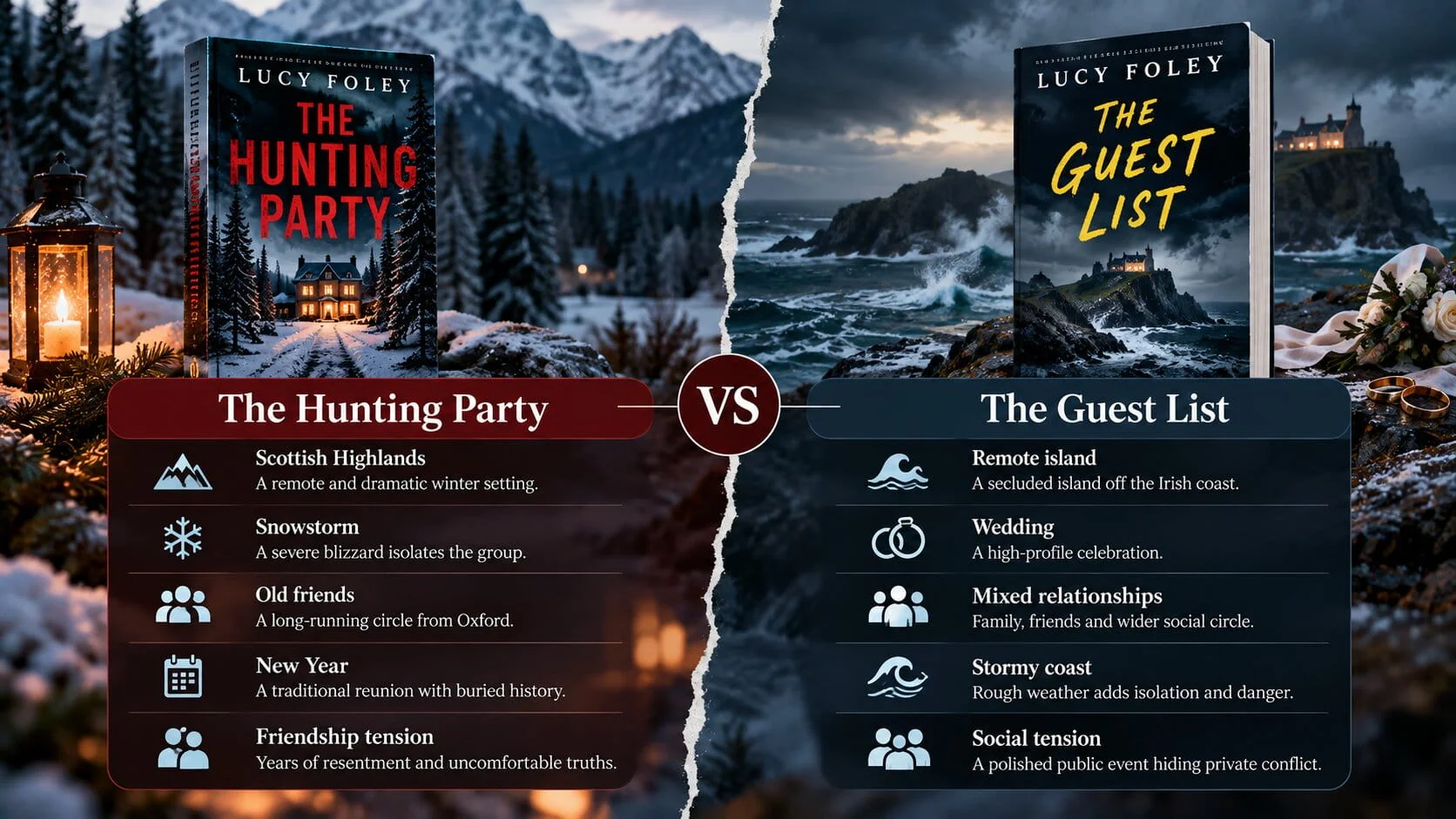
The Hunting Party
- Scottish Highlands
- snowstorm
- New Year reunion
- old university friends
- friendship history
- colder and more enclosed atmosphere
The Guest List
- remote Irish island
- wedding
- family and friendship tension
- broader social group
- polished public image vs private resentment
- more event-driven atmosphere
If old friendships and snowy isolation sound more appealing, choose The Hunting Party.
If you prefer wedding tension and a wider mix of relationships, choose The Guest List.
For the full reading order, see our Lucy Foley Books in Order: Complete Reading Guide.
What I Liked Most About The Hunting Party
The setting is the strongest part of the book.
The estate feels remote from the beginning.
Then the snow makes that isolation more important.
The atmosphere gives the mystery a natural sense of pressure without needing constant action.
I also liked the way the group’s long history becomes increasingly uncomfortable.
These are not strangers meeting for the first time.
They already know one another’s weaknesses.
They have years of memories.
That means every argument feels connected to something older.
The multiple narrators also keep the group dynamic interesting because no one sees the friendships in exactly the same way.
What Could Have Been Better?
The opening could move faster.
The relationship setup is necessary, but the novel takes time before the murder mystery becomes the dominant force.
Some conflicts also repeat similar ideas:
jealousy, resentment, old roles, insecurity, and competition.
Those themes fit the story, but occasionally the book spends longer reinforcing them than necessary.
The characters can also be difficult company.
That is partly the point, but it may reduce emotional investment for some readers.
Is The Hunting Party Worth Reading?
Yes, especially if atmosphere and relationship tension are important to you.
The book is strongest when it combines three things:
snowy isolation
old friendship history
the growing realization that someone inside the group is dangerous
It is not an action-heavy thriller.
It is a slow-burn closed-circle mystery.
The payoff comes from watching the polished reunion break apart until the history between the characters becomes impossible to ignore.
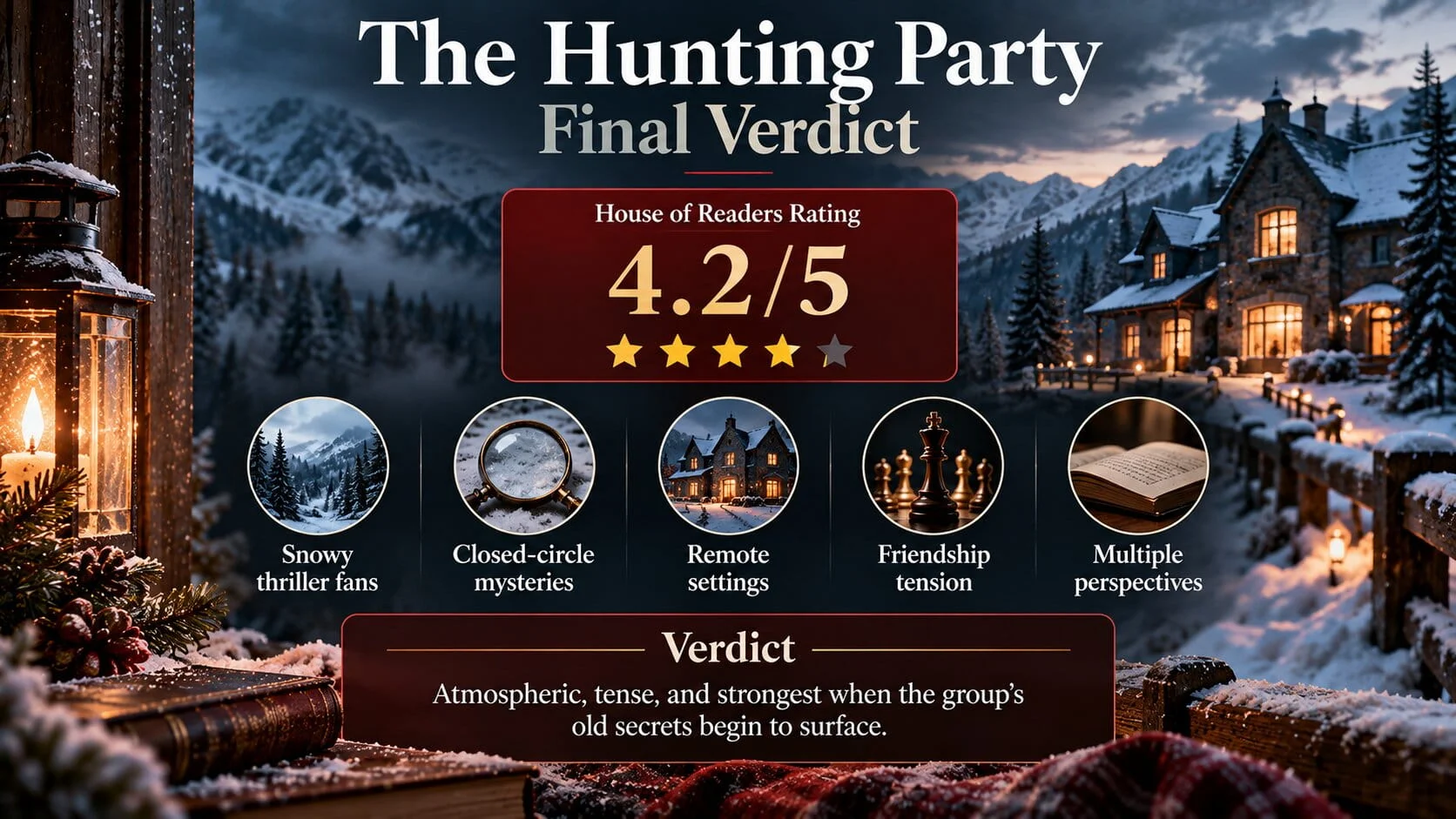
Final Verdict
House of Readers Rating: 4.2/5
The Hunting Party works because the environment and relationships reinforce each other.
The remote Scottish setting creates physical isolation.
The snow makes that isolation more dangerous.
The friendship group creates emotional pressure.
Then years of buried resentment give almost everyone a reason to look suspicious.
The beginning is slower than the final stretch, and several characters are deliberately difficult to like.
But readers who enjoy atmospheric closed-circle mysteries should find plenty here to enjoy.
If The Guest List introduced you to Lucy Foley, The Hunting Party is an easy next choice.