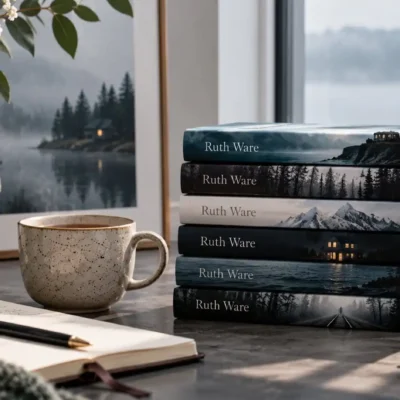
How to Read More Books: 12 Simple Habits That Actually Work
Reading more books usually does not require more motivation.
It requires less friction.
Most people do not stop reading because they suddenly dislike books. Reading simply gets pushed aside by work, phones, streaming, errands, and everything else competing for attention.
The solution is not to force yourself into an unrealistic reading challenge.
It is to make reading easier to start, easier to continue, and easier to fit into your actual life.
Here are 12 simple habits that can help you read more without making reading feel like another obligation.
Quick Answer: How Can You Read More Books?
The easiest way to read more is to stop relying on motivation.
Instead:
- make books easier to reach
- read in short sessions
- choose books you actually enjoy
- keep your next book ready
- reduce small distractions
- use different formats when convenient
- connect reading to routines you already have
You do not need to read for hours every day.
Ten or fifteen minutes used consistently can make a noticeable difference over time.

1. Keep a Book Within Reach
The easier something is to start, the more likely you are to do it.
If your book is buried on a shelf, reading requires a conscious decision.
If it is already beside you, the decision becomes easier.
Try keeping a book:
- beside your bed
- on your desk
- next to the sofa
- in your bag
- near your favorite chair
You are creating a visual reminder.
That small change can make reading feel like the obvious next activity instead of something you need to plan.
2. Read for 10 Minutes Instead of Waiting for an Hour
One of the biggest mistakes people make is waiting for a large block of free time.
That block often never arrives.
Ten minutes is much easier to find.
You could read:
- with morning coffee
- during lunch
- before bed
- while waiting for an appointment
- after finishing work
A short session may turn into a longer one.
But even when it does not, you still read.
Consistency matters more than session length.
3. Stop Reading Books You Do Not Enjoy
Trying to finish the wrong book can stop your entire reading habit.
You keep telling yourself:
I should finish this first.
Then you avoid reading because you do not actually want to continue.
If a book is not working for you, move on.
There is no rule that says every book you start must be finished.
Reading more often becomes much easier when you are genuinely curious about what happens next.
4. Choose Books Based on Your Current Mood
The book you normally like may not be the book you want today.
Maybe you usually enjoy long fantasy novels but currently want something fast.
Maybe you usually read thrillers but want something calmer.
Instead of asking:
What should I be reading?
ask:
What kind of reading experience do I want right now?
That makes choosing your next book much easier.
5. Keep Your Next Book Ready
One reading habit often breaks in the gap between books.
You finish one.
Then spend several days deciding what to read next.
Keep a short list of three to five books you genuinely want to read.
That way, when you finish one title, your next choice is already waiting.
You avoid turning book selection into another task.
6. Replace a Small Amount of Phone Time
You do not need to stop using your phone completely.
That is rarely realistic.
Instead, replace a small part of your usual scrolling time.
For example:
10 minutes of reading before opening social media in the morning
or:
one chapter before scrolling at night
The goal is not to eliminate entertainment.
It is simply to create a little more space for books.

7. Attach Reading to an Existing Routine
New habits are easier when they are connected to something you already do.
Try:
After breakfast, read five pages.
After dinner, read one chapter.
Before sleeping, read for ten minutes.
You do not need a perfect reading schedule.
You just need a repeatable moment.
Over time, reading starts to feel like part of the routine instead of something separate.
8. Try Audiobooks
If sitting down with a book is difficult, listening can help you fit more stories into your day.
Audiobooks work especially well while:
- commuting
- walking
- cleaning
- cooking
- exercising
- doing repetitive tasks
They are not a replacement for physical books.
They are simply another format.
If your goal is to experience more books, audiobooks can make use of time that would otherwise not be reading time at all.
9. Use Ebooks When They Are More Convenient
A physical book is great.
But convenience matters more than format.
An ebook lets you read:
- on your phone
- on a tablet
- on an ereader
- during short waiting periods
You may only read three or four pages at a time.
But those pages still count.
Reading becomes easier when you stop insisting that every session has to look the same.
10. Carry a Book With You
Waiting time adds up.
You may have spare minutes:
- before appointments
- while commuting
- during lunch breaks
- before meetings
- while waiting for someone
If you already have a book with you, those small gaps can become reading time.
You do not need to plan a special session.
You simply use time that already exists.
11. Track Your Reading Only if It Helps
Some readers love tracking:
- books finished
- pages read
- reading streaks
- yearly goals
Others find that it creates pressure.
Use tracking if it makes reading more enjoyable.
Stop if it makes reading feel like performance.
The purpose of tracking is to support the habit.
The habit should not exist just to improve the tracker.
12. Protect a Small Reading Window
If reading always happens only after everything else is finished, it will often be the first thing removed from your day.
Choose a small window and protect it.
It could be:
15 minutes before bed
or:
20 minutes on Sunday morning
or:
one chapter after lunch
It does not need to be long.
It only needs to exist consistently.

How Many Books Can You Read in a Year?
That depends entirely on:
- your reading speed
- book length
- how often you read
- the formats you use
- your schedule
You do not need a large number to have a successful reading year.
Someone who reads twelve excellent books may enjoy reading more than someone rushing through fifty books they barely remember.
If numbers motivate you, set a goal.
If they create pressure, ignore them.
Should You Set a Reading Goal?
Only if it helps.
A goal such as:
12 books this year
can provide direction.
But a goal can become counterproductive if you start:
- choosing books only because they are short
- rushing through books
- avoiding longer novels
- feeling behind
- treating reading like homework
You can also use softer goals such as:
Read most evenings
or:
Read for 15 minutes a day
Those often build a stronger habit than focusing only on completed books.
How Can You Read More When You Are Busy?
Do not search for an extra hour.
Search for small unused moments.
Try:
- 10 minutes before bed
- an audiobook during your commute
- a few ebook pages while waiting
- one chapter during lunch
- reading before opening social media
Busy readers often succeed by spreading reading across the day rather than creating one large session.
Is It Better to Read One Book at a Time?
That depends on you.
One book at a time works well if multiple choices distract you.
Several books at once can work if they serve different moods.
For example:
- a physical novel at home
- an audiobook while commuting
- an ebook when traveling
There is no correct method.
Choose whichever approach makes you read more comfortably.
What Should You Read if You Are Trying to Read More?
Start with something accessible.
Look for:
- a strong premise
- manageable length
- short chapters
- a genre you already enjoy
- writing that feels easy to follow
This is not the moment to pick a difficult book just because it looks impressive.
Build momentum first.
You can always challenge yourself later.
If you enjoy psychological thrillers, you might start with:
The Silent Patient Review: Is It Worth Reading?
Or browse:
Books Like The Silent Patient: 12 Thrillers to Read Next
How to Read More Without Making It Feel Like Work
This is the most important part.
Do not optimize every minute.
Do not measure every page.
Do not turn reading into another productivity system.
Instead:
- choose better books
- make reading convenient
- read for short periods
- stop when you are tired
- switch formats when needed
Reading more should come from enjoying books more often.
Not from forcing yourself harder.
A Simple 7-Day Read-More Challenge
If you want a gentle reset, try this:
Day 1
Choose one book you genuinely want to read.
Day 2
Read for 10 minutes.
Day 3
Keep the book somewhere visible.
Day 4
Replace 10 minutes of scrolling with reading.
Day 5
Read during a normally unused part of your day.
Day 6
Try another format, such as an ebook or audiobook.
Day 7
Choose one reading window you can repeat next week.
At the end of seven days, you do not need a perfect habit.
You only need reading to feel easier than it did before.

Final Thoughts
Reading more books is rarely about finding enormous amounts of free time.
It is about making reading easier to choose.
Keep a book nearby.
Read for a few minutes.
Choose stories you actually enjoy.
Stop forcing books that are not working.
Use audiobooks or ebooks when they fit your life better.
And protect a small amount of reading time before everything else takes it.
The goal is not to become someone who finishes the most books.
The goal is to become someone who naturally reaches for books more often.