A luxurious coastal retreat, an exclusive gathering, and a summer celebration should make an inviting escape. In Lucy Foley’s The Midnight Feast, the ancient woods beside the beautiful property and the histories surrounding it make that promise feel less secure.
This spoiler-free The Midnight Feast review assesses the atmosphere, mystery, characters, pacing, and likely reading experience. The short verdict: it is an appealing choice for readers who enjoy multi-perspective mysteries, hidden connections, and an unsettling setting. Readers seeking immediate action, a simple timeline, or a very small cast may prefer another thriller.
This assessment draws on the verified premise and published criticism, rather than a claimed firsthand reading. The publisher’s book description establishes the setting and setup; Publishers Weekly’s review provides an independent critical reference.
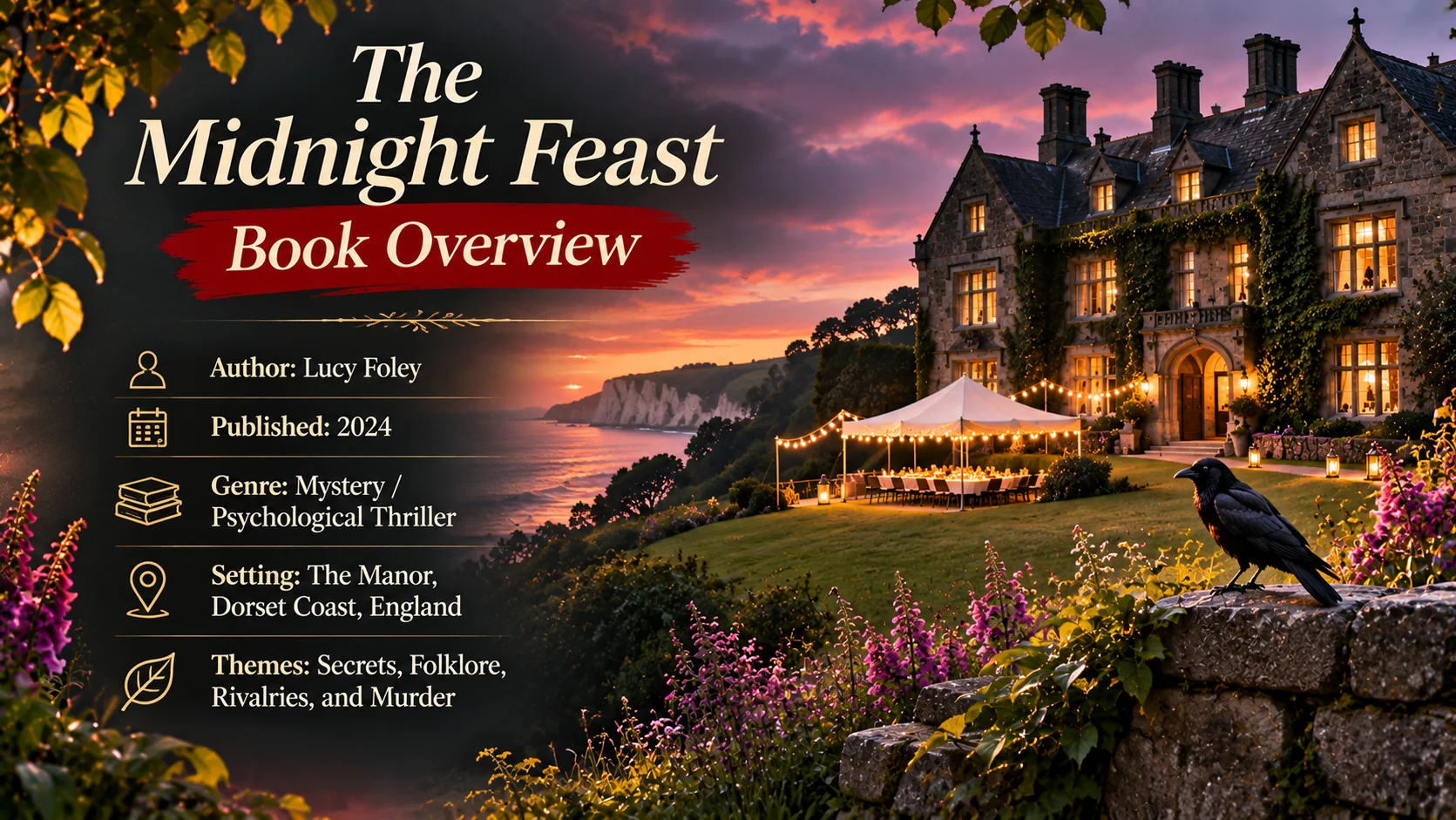
The Midnight Feast by Lucy Foley: Book Details
| Detail | Information |
|---|---|
| Title | The Midnight Feast |
| Author | Lucy Foley |
| Publication year | 2024 |
| Genre | Mystery / Psychological Thriller |
| Setting | Luxury retreat near the Dorset coast, England |
| Story structure | Multiple perspectives and interconnected timelines |
| Series | Standalone novel |
| Review type | Spoiler-free |
What Is The Midnight Feast About?
The Manor is preparing for its opening weekend on the Dorset coast. Its guests arrive for an exclusive countryside retreat and a summer-solstice celebration, but the development has brought tensions with the surrounding community.
Ancient woodland borders the luxurious property. Local legends about mysterious figures known as the Birds add unease, while old relationships, resentments, and private agendas complicate the gathering. A death turns the celebration into a murder mystery.
That is enough of the setup to begin. The identity of the victim, the hidden connections, and the explanation behind the folklore are best discovered in the novel.
The Midnight Feast Review: What Works Well?
1. The Atmospheric Coastal Setting
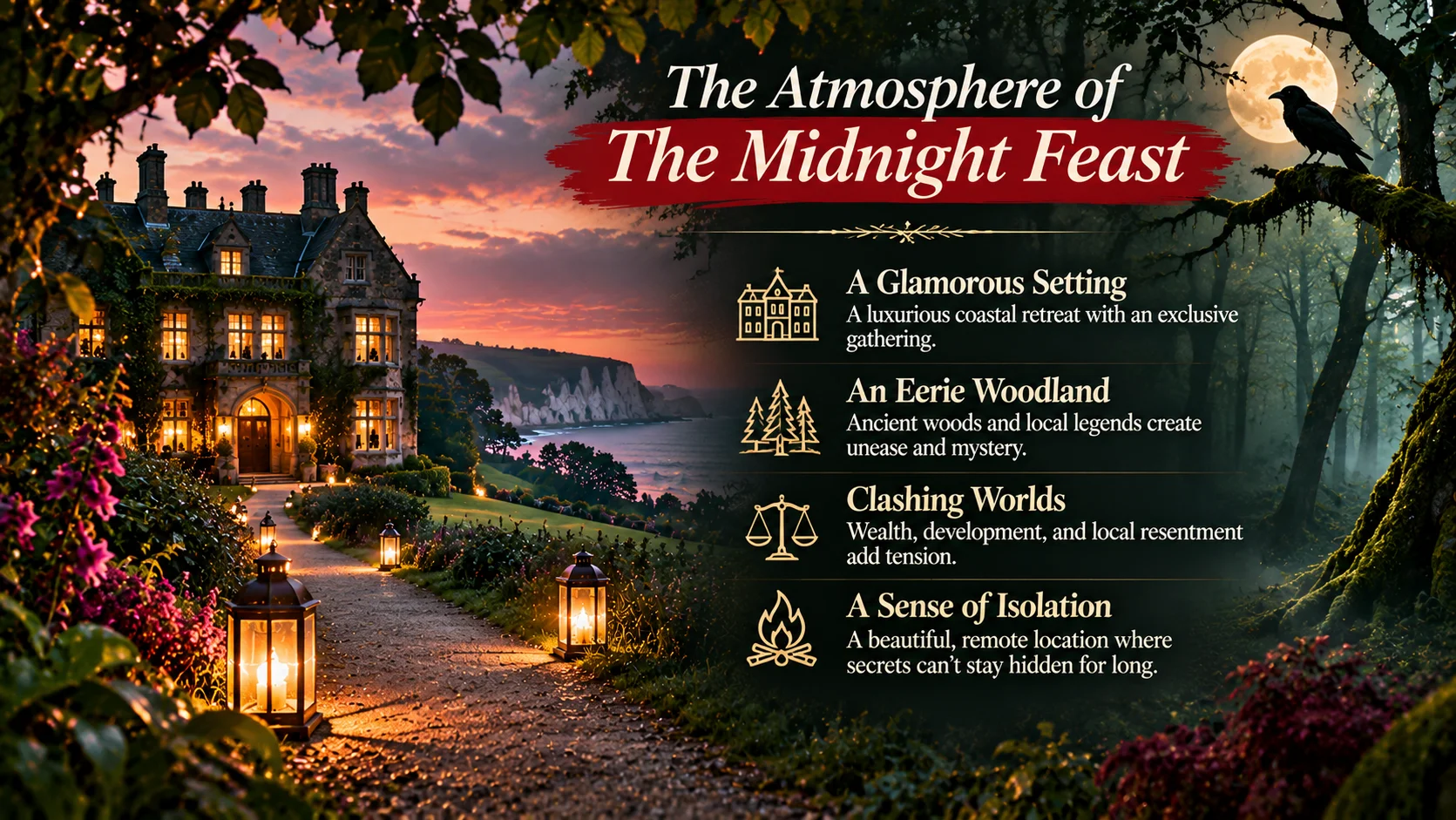
The most distinctive attraction is the contrast between the polished retreat and the ancient woodland around it. Luxury suggests control: carefully arranged surroundings, exclusive access, and a celebration designed to impress. The woods and local history introduce things that the development cannot simply tidy away.
That contrast gives the location a narrative purpose. Wealth and local resentment make the setting socially tense as well as visually appealing. Readers who enjoy beautiful places carrying troubling histories have a clear reason to be interested, without expecting every scene to be frightening.
2. The Eerie Folklore
The Birds give the mystery an additional layer of uncertainty. A threatening local legend can influence how people interpret events before anything has been proved. It invites questions about what people believe, what they fear, and what they might use to unsettle others.
Publishers Weekly specifically praises the folk-horror atmosphere. The useful distinction is between eerie folklore and confirmed supernatural events: this is crime fiction with folk-horror influences, not a promise that supernatural forces are real. Explaining the legends here would take away part of the mystery.
3. Hidden Connections Between Characters
The arrival of people with shared history makes the glamorous weekend more than a gathering of strangers. Private relationships create a second version of the celebration beneath the public one, giving the reader reasons to look beyond polite interactions.
The appeal lies in discovering how past and present fit together. If connections are what draw you into an ensemble mystery, this structure offers more to follow than the central question of who committed a crime. No particular relationship revelation needs to be known in advance.
4. Multiple Perspectives and Unfolding Clues
Changing viewpoints let a mystery revisit an event from different positions. One account can complicate another without immediately resolving it, asking the reader to distinguish an impression from a reliable explanation.
That is also a trade-off. Publishers Weekly notes that tracking the narrators can be challenging, while responding positively to the surprises. The structure is likely to suit readers who enjoy actively connecting accounts more than those who want one clear guide through the story.
Where The Midnight Feast May Disappoint Some Readers
A Slow-Burning Setup
The premise asks readers to become interested in a place, its residents, its visitors, and its history. That kind of atmosphere-building serves a different purpose from an action-heavy opening. If your preferred thriller establishes immediate danger and moves directly from one urgent event to the next, the setup may feel gradual.
The practical question is whether social unease holds your attention. A developing conflict can be absorbing without being fast, but the presence of murder does not make every part of a novel an action sequence.
A Large Cast to Follow
Several narrators and changing relationships require attention. The challenge is not just remembering names; it is remembering whose account you are hearing and how that account relates to other information.
This need not feel confusing to every reader. It does mean the book may be a less convenient choice if you strongly prefer a single narrator or read in short, interrupted bursts. The independent criticism supports treating cast management as a real consideration rather than a universal flaw.
Folklore May Not Appeal to Everyone
Readers who want a strictly grounded detective story may be less interested in legends, ominous woods, and uncertainty about the source of a threat. Here, those elements are part of the attraction, not incidental decoration.
That does not make the novel entirely supernatural. It means the route to the mystery includes an eerie register that some crime readers will enjoy more than others.
The Mystery Relies on Interconnected Revelations
A layered mystery asks the reader to wait for information that changes earlier interpretations. If you enjoy assembling histories and reassessing impressions, that delayed understanding can be rewarding. If you prefer a transparent investigation built around clearly presented evidence, it may feel less satisfying.
It would be misleading to promise that every reader will find every twist convincing. The better recommendation is based on the type of mystery you enjoy, rather than a blanket guarantee about its ending.
The Midnight Feast Characters: Who Drives the Story?
Francesca Meadows
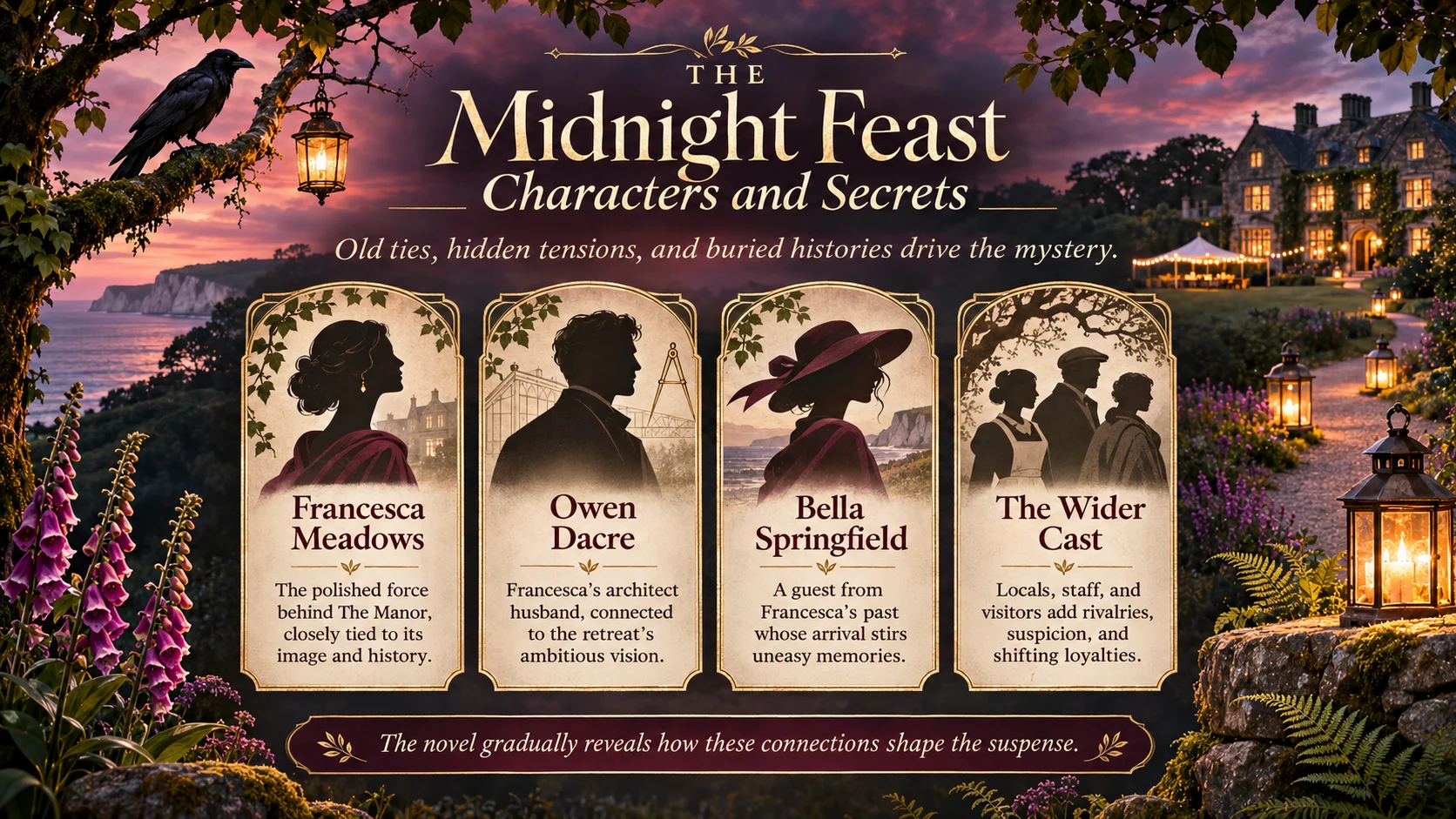
Francesca is central to the glamorous Manor project and has connections to the area’s history. Her role brings the development’s polished public image into the same narrative space as the past. Discussing her beyond that would risk revealing the very connections the mystery explores.
Owen Dacre
Francesca’s architect husband is associated with the development of the retreat. His position connects the building’s design and prestige with the people presenting it to the world. That is his useful starting role, without assuming motives the setup does not establish.
Bella Springfield
Bella arrives as a guest linked to Francesca’s past. Her presence makes history relevant to an occasion that is publicly about a new beginning. The nature of those connections belongs to the unfolding story.
The Wider Cast
Resort staff, other guests, and the local community give different positions from which to view The Manor. A development can represent luxury to visitors and something much more contested to people who live nearby. That difference helps explain why the ensemble matters, even before individual secrets emerge.
Is The Midnight Feast Scary?
Approach it as an atmospheric mystery thriller with folk-horror influences, rather than a conventional supernatural horror novel. The eerie woodland, threatening legends, suspense, and murder give it an unsettling frame.
That is different from promising constant scares or specifying how disturbing every reader will find it. If you dislike ominous folklore even when its meaning remains uncertain, the atmosphere may not be for you. If you enjoy unease around an otherwise grounded mystery, it is a relevant attraction.
Is The Midnight Feast Fast-Paced?
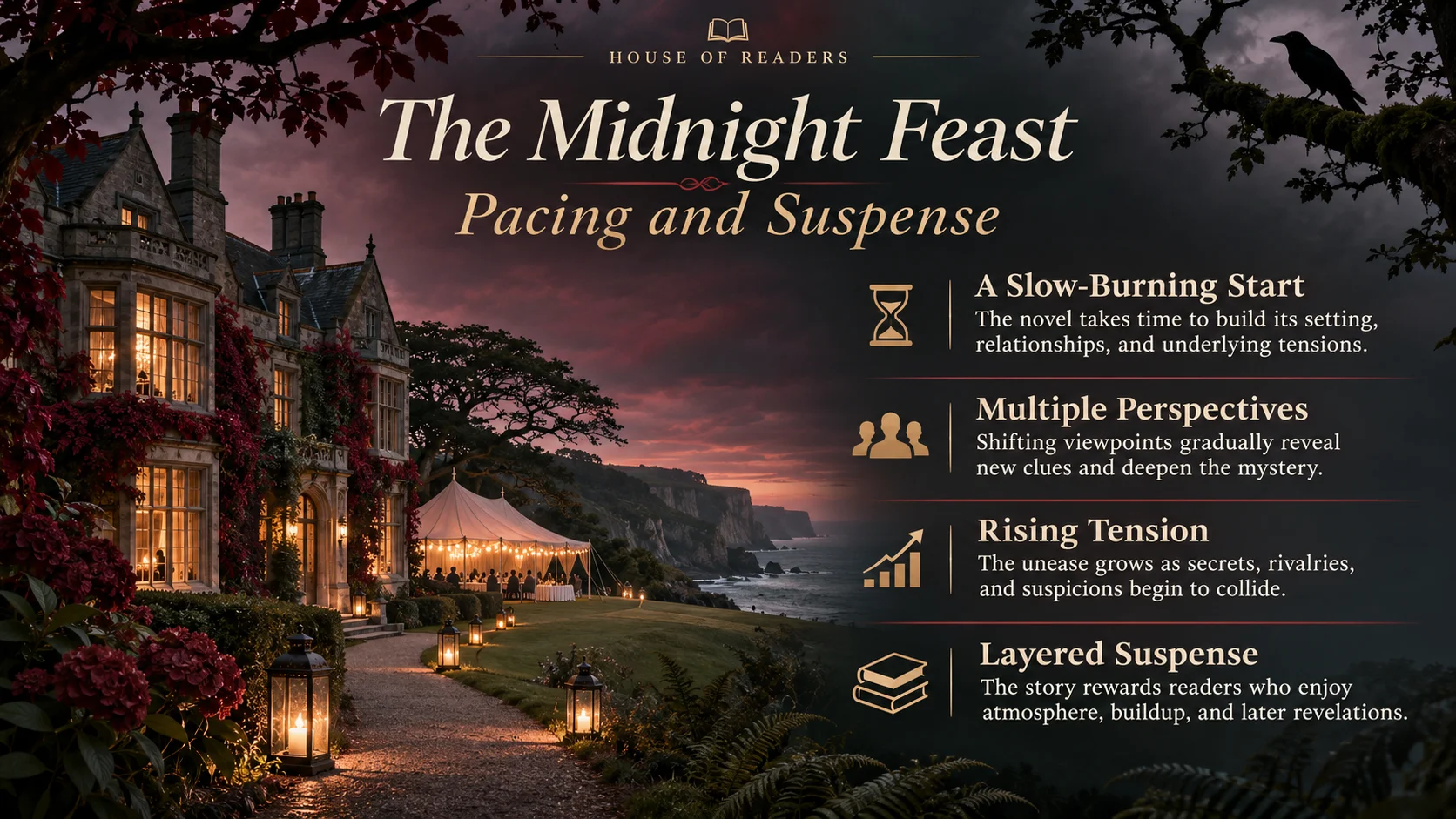
It is better understood as an accumulating mystery than as nonstop action. Changing viewpoints introduce questions, relationships develop tension, and later revelations alter the significance of earlier information.
The opening’s mystery and the larger structure can create curiosity while the atmosphere remains slow-burning. Readers who enjoy social suspicion may find plenty to follow; those who measure pace mainly by external action may be less engaged.
Allow for that difference in preference. A complex cast and past-present connections reward attention, and the prospect of later surprises does not erase the time needed to establish them.
Are the Twists in The Midnight Feast Worth It?
The best reason to choose this book is an interest in layered revelation: hidden histories, uncertain motives, misleading impressions, and connections between earlier events and the present gathering. The twists matter because they can change the picture the different viewpoints have been building.
Publishers Weekly’s favorable response to the surprises supports recommending it to readers who value that experience. It is not evidence that every reveal will work equally well for everyone, and it would be unfair to hint at specific identities or reversals to make the case.
If you want to uncover a network of secrets, the structure is a promising fit. If you mainly want a puzzle with an immediately visible set of facts, choose with more caution.
The Midnight Feast vs Other Lucy Foley Thrillers
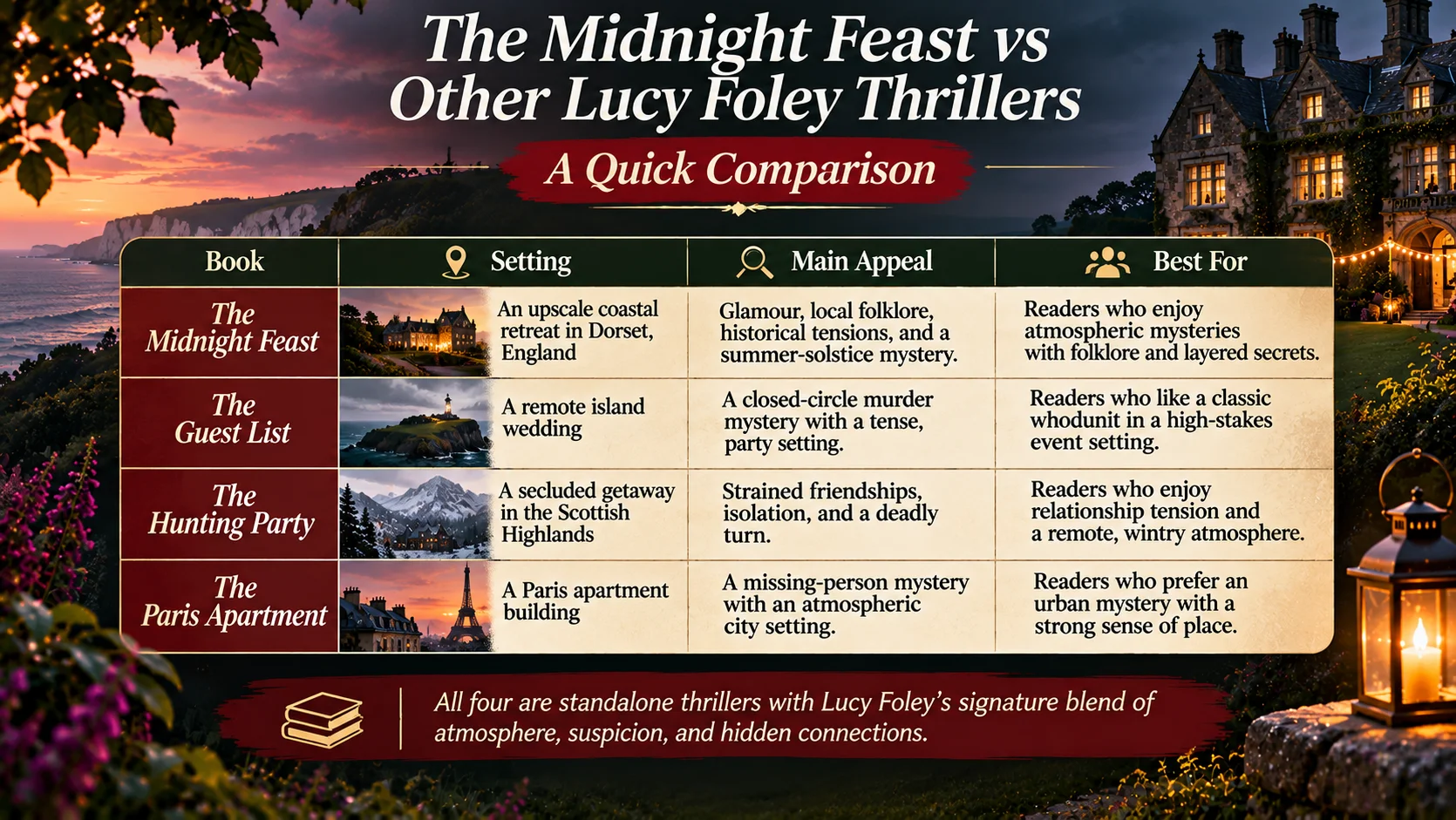
| Book | Setting | Main Appeal | Best For |
|---|---|---|---|
| The Guest List | Isolated island wedding | Closed-circle murder mystery | A defined gathering and social tension |
| The Hunting Party | Remote Scottish getaway | Strained friendships and a death | Winter isolation and group history |
| The Paris Apartment | Urban apartment building | A disappearance and suspicious residents | Claustrophobic city mysteries |
| The Midnight Feast | Upscale Dorset retreat | Folklore, historical tensions, solstice gathering | Eerie atmosphere and connected histories |
For a different version of Foley’s ensemble suspense, our The Guest List review covers the island-wedding mystery. The The Hunting Party review focuses on a remote Scottish escape, while our The Paris Apartment review looks at the urban missing-person setup.
The useful distinction is setting and mood, not a ranking of which novel is definitively best.
Who Should Read The Midnight Feast?
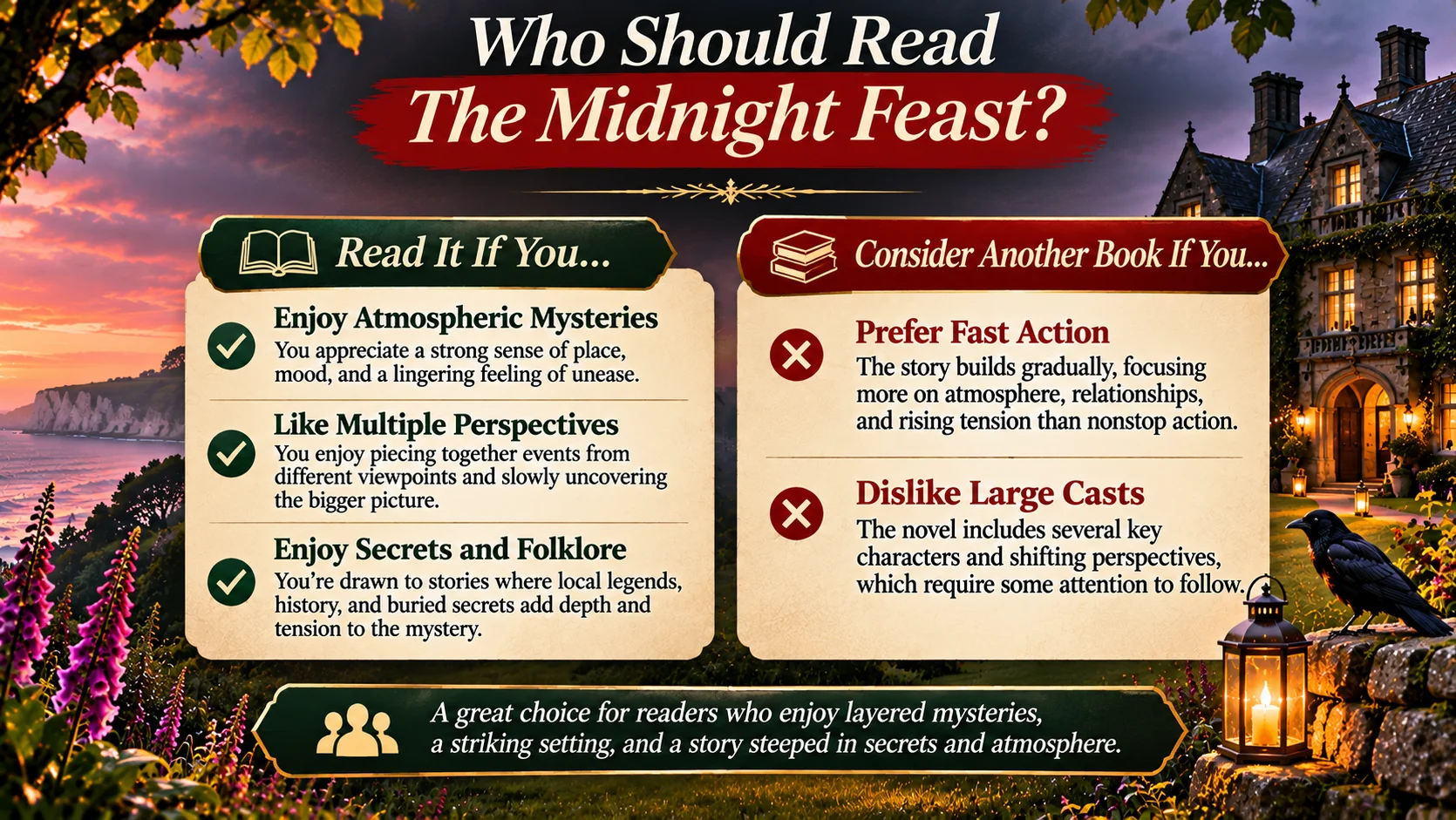
Read It If You Enjoy Atmospheric Mysteries
Choose it if the contrast between a glamorous retreat and uneasy woodland is part of what makes you curious. The setting contributes social conflict and a sense of history, rather than simply providing scenery.
Read It If You Like Multiple Perspectives
It is a promising match if you enjoy comparing accounts and gradually connecting people’s positions. You will need to follow more than one narrator instead of relying on a single steady viewpoint.
Read It If You Enjoy Secrets and Folklore
Local legends and unresolved history are central to its identity. Readers interested in the way stories about a place shape present-day tension have a specific reason to try it.
Consider Skipping It If You Prefer Fast Action
If you want immediate movement with little setup, the atmosphere and relationship-building may not provide the pace you seek. The mystery offers accumulating tension rather than an assurance of relentless action.
Consider Another Book If You Dislike Large Casts
If tracking narrators feels like work, the interconnected structure may distract from the suspense. A mystery with a smaller cast or a single narrator could be a better choice for your current reading mood.
Is The Midnight Feast Worth Reading?
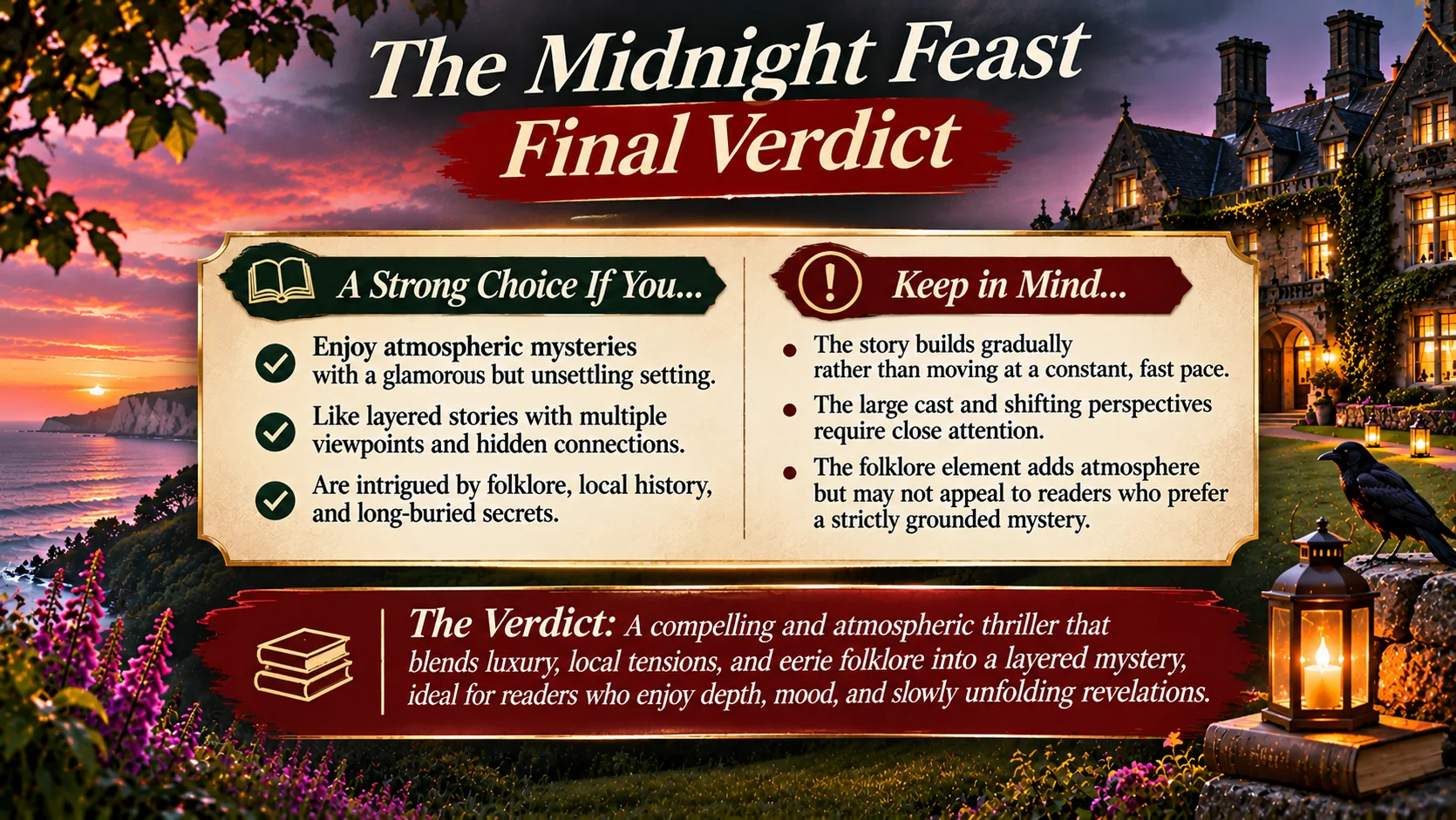
Yes, for readers attracted to glamorous but unsettling locations, complicated social relationships, eerie folklore, and mysteries built through multiple viewpoints. The verified premise gives those readers a distinctive setting, and the positive independent assessment supports its atmosphere and revelation-driven appeal.
The main trade-offs are a gradual setup and the attention needed to follow the cast. Readers who prefer quick action, a straightforward investigation, or a small group of narrators may find another thriller more suitable. This is a conditional recommendation, not a claim that it is essential reading for everyone.
Final Thoughts
The Midnight Feast places the promise of an immaculate retreat beside a history that is harder to control. That contrast is the clearest reason to consider it.
If Foley’s layered mysteries and atmospheric settings are what you enjoy, it is a strong candidate for your reading list. Go in for the unease, the competing perspectives, and the connections to uncover, while leaving the identities and final revelations undiscovered.
Looking for More Atmospheric Thrillers?
If you enjoy mysteries filled with secrets, suspicious guests, and unsettling settings, explore our other Lucy Foley reviews and thriller recommendations.
Use our Lucy Foley Books in Order guide to choose by setting, or explore Books Like The Guest List for more isolated-group mysteries.
Frequently Asked Questions
Guests gather for the opening of The Manor, a luxury Dorset retreat, where local tensions, old relationships, and unsettling woodland folklore precede a murder.
It is a strong option for readers who enjoy eerie settings, layered secrets, and several viewpoints. Readers seeking immediate action or a small cast may prefer another mystery.
Yes. It is a standalone novel with its own setting, cast, and mystery.
It has an eerie atmosphere and folk-horror influences, but is best approached as a mystery thriller rather than a conventional supernatural horror story.
It combines developing tension with a gradual setup and later revelations. Its appeal is an accumulating mystery rather than nonstop action.
Yes. Multiple perspectives and connections to past events are important to its structure, so following the narrators requires attention.
Both use a glamorous gathering, secrets, and multiple perspectives. The Midnight Feast adds a coastal retreat, local resentment, and woodland folklore rather than an island wedding.
Yes. You do not need to read Foley’s earlier novels to follow this separate story.