A beautiful Paris address is an inviting place to stay, until nobody will give you a straight answer about the person you came to see. If you enjoy mysteries that make ordinary conversations feel loaded, The Paris Apartment offers plenty to watch and question.
Lucy Foley takes her familiar multiple-perspective approach into a different environment from The Guest List and The Hunting Party. Here, the tension comes from an expensive apartment building, suspicious neighbors, and the sense that everyone knows something Jess does not.
This spoiler-light The Paris Apartment review focuses on the reading experience: atmosphere, pacing, characters, and whether this is the right thriller for you.
The Paris Apartment at a Glance
- Author: Lucy Foley
- Genre: Mystery / Thriller
- Setting: Paris
- Story style: Multiple perspectives
- Main appeal: A claustrophobic apartment-building mystery, secrets, and suspicious neighbors
- Best for: Readers who enjoy atmospheric mysteries and ensemble casts
- Spoiler level of this review: Low
Quick Verdict
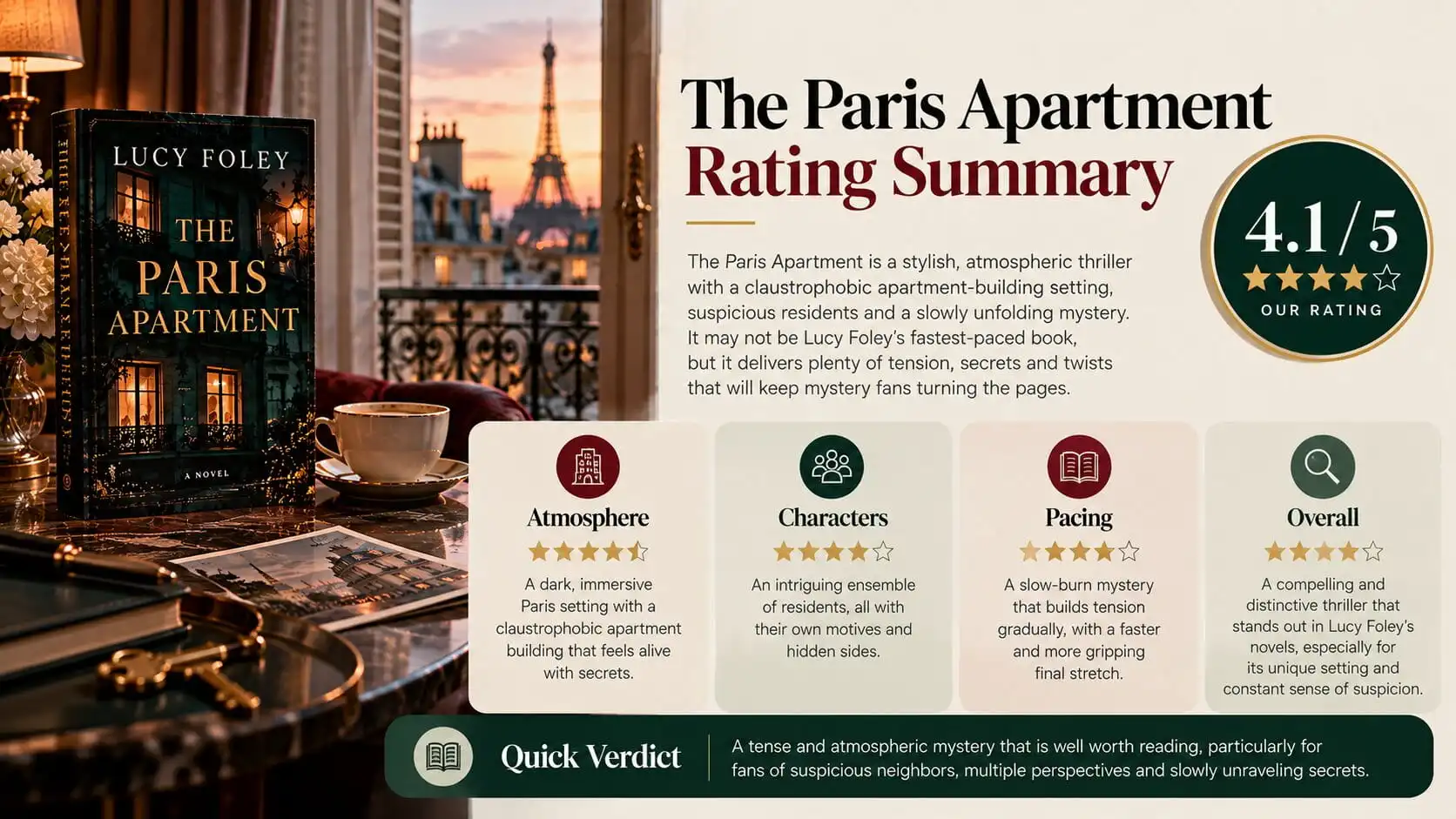
Rating: 4.1 / 5.
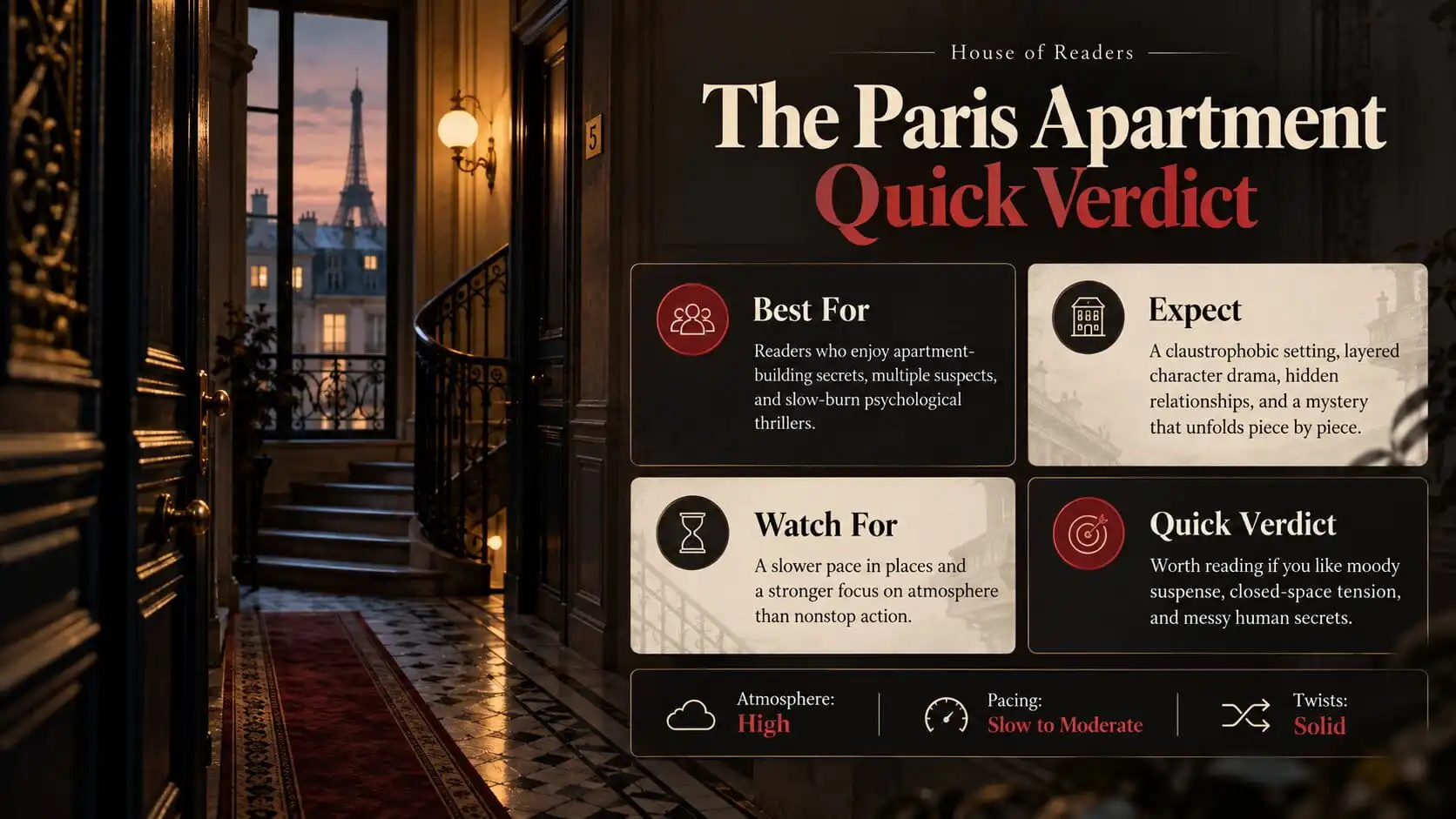
The Paris Apartment is worth reading if you enjoy atmosphere, shifting suspicion, and gradually discovering the connections between residents. Its building gives the mystery a distinctive mood. The opening is deliberate, though, so readers expecting immediate action may need more patience.
What Is The Paris Apartment About?
Jess travels to Paris to stay with her half-brother Ben. When she reaches his expensive apartment building, he is missing. Instead of finding an easy explanation, she encounters residents who seem to know more than they are willing to admit.
Jess begins investigating his disappearance, trying to understand both what happened to Ben and the people around him. That is enough setup to approach the novel: the pleasure lies in following the gaps between what residents say, what they know, and what Jess can piece together.
What to Expect From The Paris Apartment
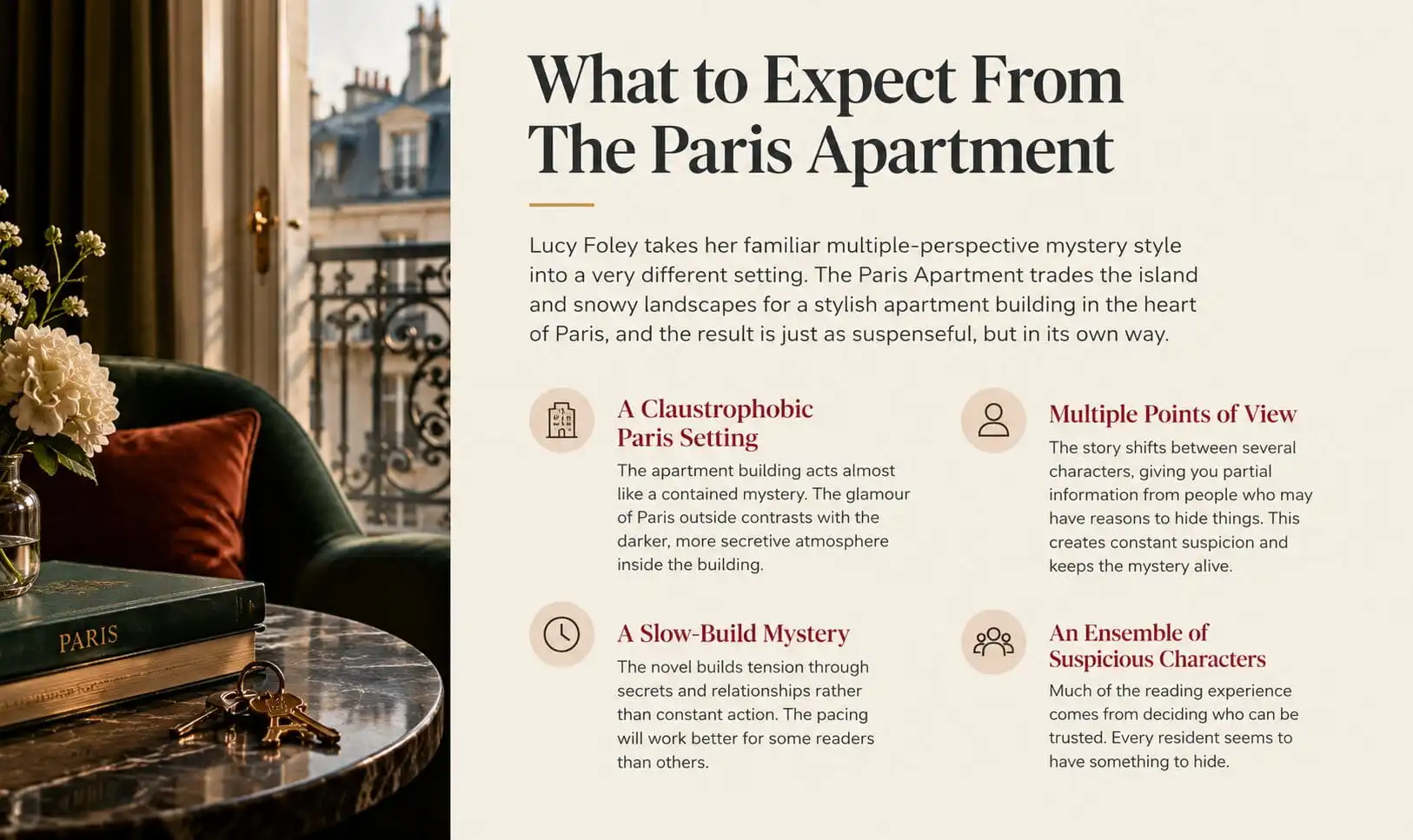
A Claustrophobic Paris Setting
The apartment building acts almost like a contained mystery setting. People live close together, yet access to their lives and motives feels carefully restricted. The glamour associated with Paris contrasts with the darker, more secretive atmosphere inside the building. Expect unease rather than a leisurely tour of the city.
Multiple Points of View
The story shifts between several characters, giving you partial information from people with reasons to hide things. A new perspective can change the meaning of an earlier encounter without settling every question. That creates a reading experience built around weighing accounts rather than simply following Jess’s investigation.
A Slow-Build Mystery
Tension develops through secrets and relationships rather than constant action. If you enjoy noticing connections and sitting with uncertainty, the gradual approach can be absorbing. If you want a thriller that races from its first pages, the setup may feel slower than you hoped.
An Ensemble of Suspicious Characters
Much of the appeal comes from deciding who can be trusted. The residents make the building feel socially crowded but emotionally closed off. You may be more interested in what each person is concealing than in finding a character to warmly identify with.
The Paris Apartment Pacing
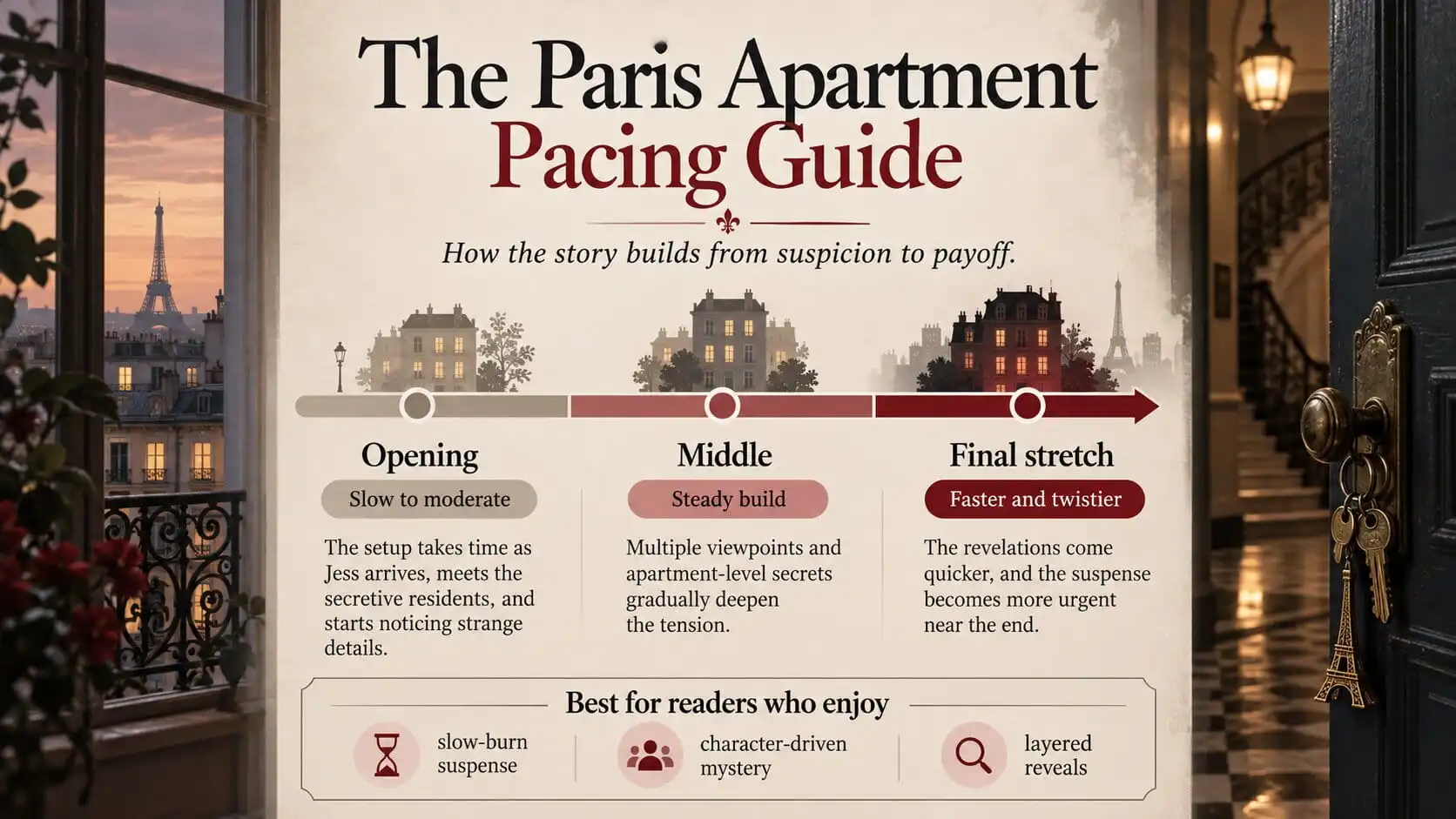
Beginning
The opening establishes the atmosphere, Jess’s arrival, and Ben’s disappearance while introducing the residents. It asks you to get your bearings and notice the building’s uncomfortable dynamics. The missing-person question supplies direction, but the early reading experience is more watchful than urgent.
Middle
As the investigation expands, the changing viewpoints reveal more history and suspicion shifts between characters. This is where the ensemble structure does much of its work. The interest comes from revising your impressions and seeing how separate pieces might fit together.
Final Stretch
Revelations arrive faster, connections become clearer, and suspense increases. The structure moves from gathering uncertainties toward resolving them, giving the later sections more momentum without needing to describe any twists here.
Readers who appreciate slow-burn mysteries are likely to respond better to this shape than those looking for a relentless thriller. The question is whether gradual discovery keeps you engaged while you wait for the pace to gather.
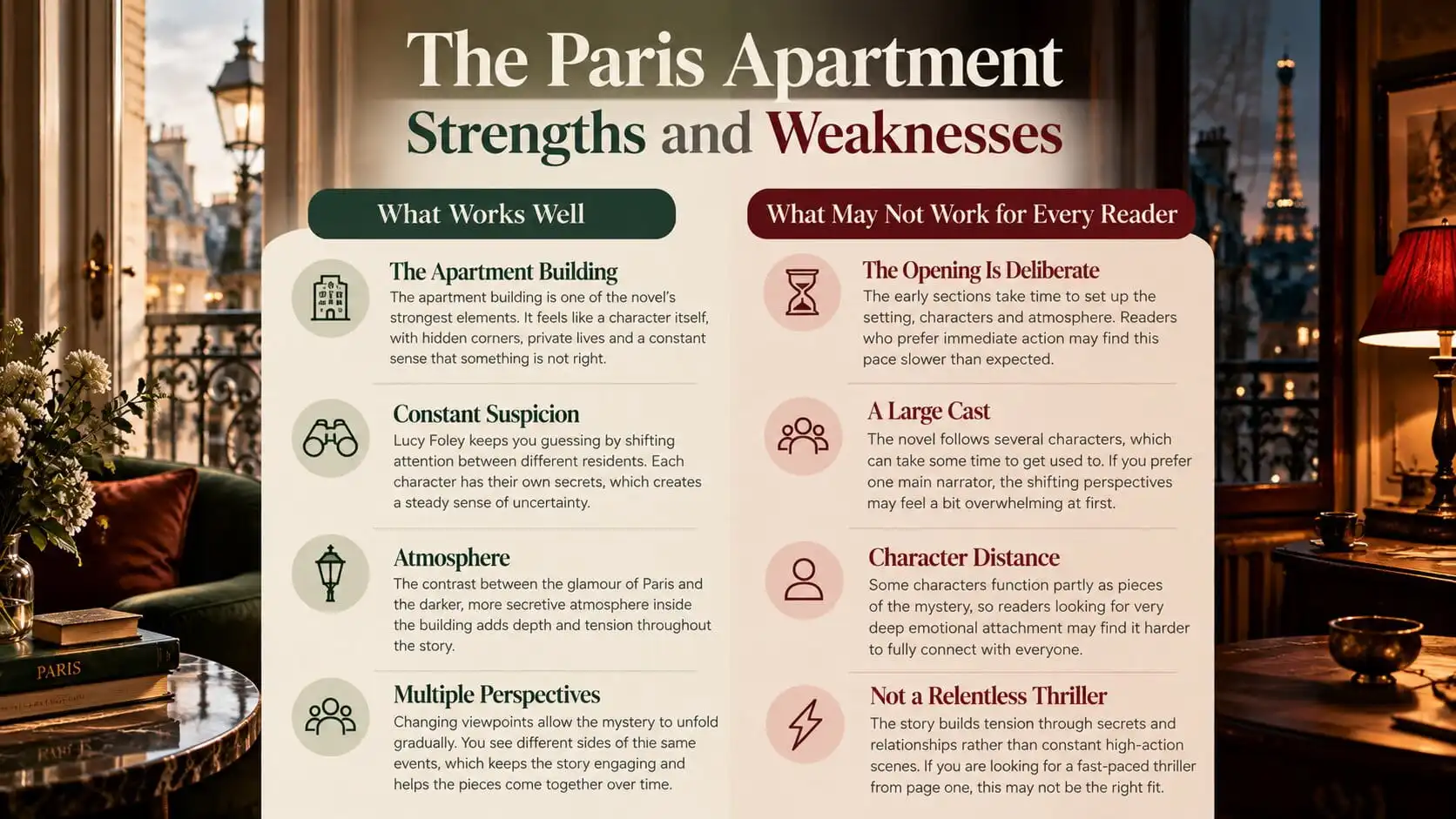
What Works Well
The Apartment Building
The contained building is one of the novel’s strongest elements. It gives the mystery clear boundaries while keeping other people’s lives out of reach. Sharing an address does little to create trust, and that tension makes the setting feel integral to the story.
Constant Suspicion
Foley repeatedly shifts attention between residents. A guarded answer or a change in perspective can be enough to make you reconsider someone. The suspense holds interest through uncertainty rather than depending entirely on action scenes.
Atmosphere
Paris, hidden spaces, wealth, secrecy, and unease combine to give the novel its mood. The attractive address promises comfort, while the building’s private world feels increasingly difficult to read. That contrast is a stronger draw than the city setting alone.
Multiple Perspectives
Changing viewpoints allow the mystery to expand gradually. You see more than Jess can see, but that extra access does not automatically make anyone trustworthy. The structure encourages you to compare versions of events and keep questioning what each account leaves out.
What May Not Work for Every Reader
The Opening Is Deliberate
The early sections spend time establishing people and atmosphere. Readers drawn in by the disappearance may want the investigation to move faster. This is a fair pacing preference, especially if immediate urgency is what you value most in a thriller.
A Large Cast
If you prefer one tightly focused narrator, the changing viewpoints may take time to settle into. Keeping track of several residents is part of the experience, and the ensemble asks for more attention than a single-perspective mystery.
Character Distance
Some characters function partly as pieces of the mystery. That supports suspicion, but it can limit emotional attachment. Readers looking for deeply character-driven literary fiction may connect less strongly than readers who enjoy the construction of a puzzle.
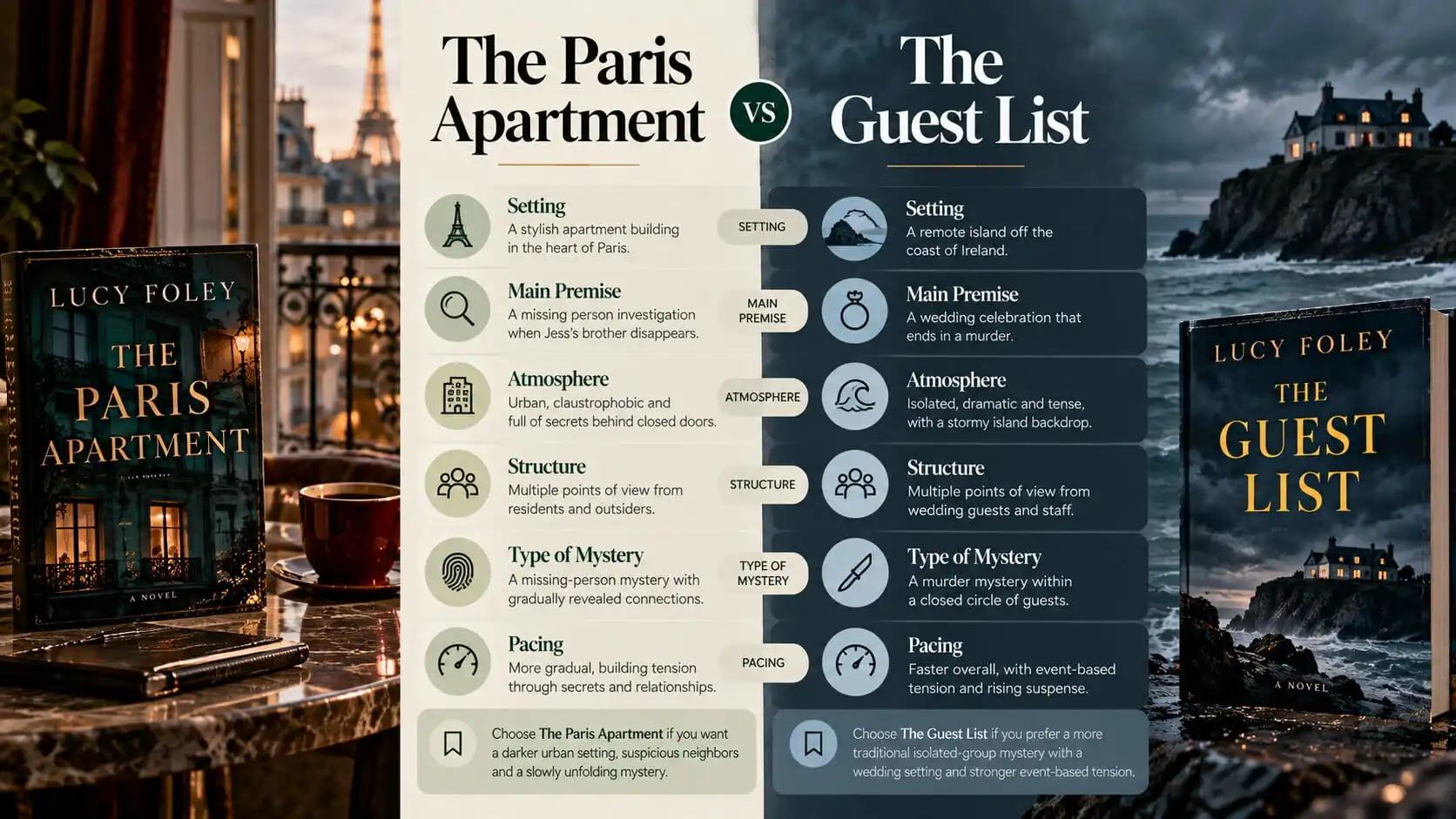
The Paris Apartment vs The Guest List
Both books invite you to question a group of people, but their settings create different kinds of tension. Neither is the better choice for every reader.
The Paris Apartment
A city setting, an apartment-building mystery, and a missing-person investigation make this the more urban and claustrophobic option. Its momentum comes from gradually discovering the residents’ secrets and understanding their connections.
The Guest List
An isolated island and a wedding give The Guest List a more traditional closed-circle structure. The occasion supplies stronger event-based tension around a murder-centered mystery, with a gathered group at the heart of the reading experience.
Choose The Paris Apartment if you want a darker urban setting and suspicious neighbors.
Choose The Guest List if you prefer an isolated-group mystery shaped around a shared event.
For a closer look, read The Guest List Review: Is Lucy Foley’s Thriller Worth Reading?
The Paris Apartment vs The Hunting Party
The Paris Apartment creates urban isolation inside an apartment building. Jess is investigating a disappearance among strangers and residents whose relationships she does not yet understand.
The Hunting Party uses snowy physical isolation at a remote lodge. Its old friends bring group history and resentment into the setting, giving suspicion a different social foundation.
Both rely on multiple perspectives and uncertainty about other people, but the atmospheres differ. Choose The Paris Apartment for an enclosed city mystery and unfamiliar neighbors. Choose The Hunting Party if snowbound isolation and tension among old friends sound more appealing.
Our The Hunting Party Review: Is Lucy Foley’s Thriller Worth Reading? explores that reading experience.
If the remote-setting appeal is what draws you in, Books Like The Hunting Party: 12 Atmospheric Thrillers to Read Next offers further options.
Who Should Read The Paris Apartment?
This is a good match if you enjoy:
- Atmospheric mysteries where setting shapes the tension
- Suspicious-neighbor stories and contained settings
- Multiple points of view and ensemble casts
- Slow-burn suspense rather than constant action
- Secrets involving several characters
- Lucy Foley’s approach to shifting suspicion
The strongest reason to pick it up is the promise of watching a private world gradually open up as Jess asks questions nobody seems eager to answer.
Who Might Want to Skip It?
You may prefer another book if you strongly favor immediate action, one narrator, or fast pacing from page one. Readers seeking deep emotional immersion in a single character rather than mystery construction may also find it less satisfying.
Those preferences do not make the novel’s approach a flaw for everyone. They help explain why an atmospheric ensemble mystery can be absorbing for one reader and feel distant or slow to another.
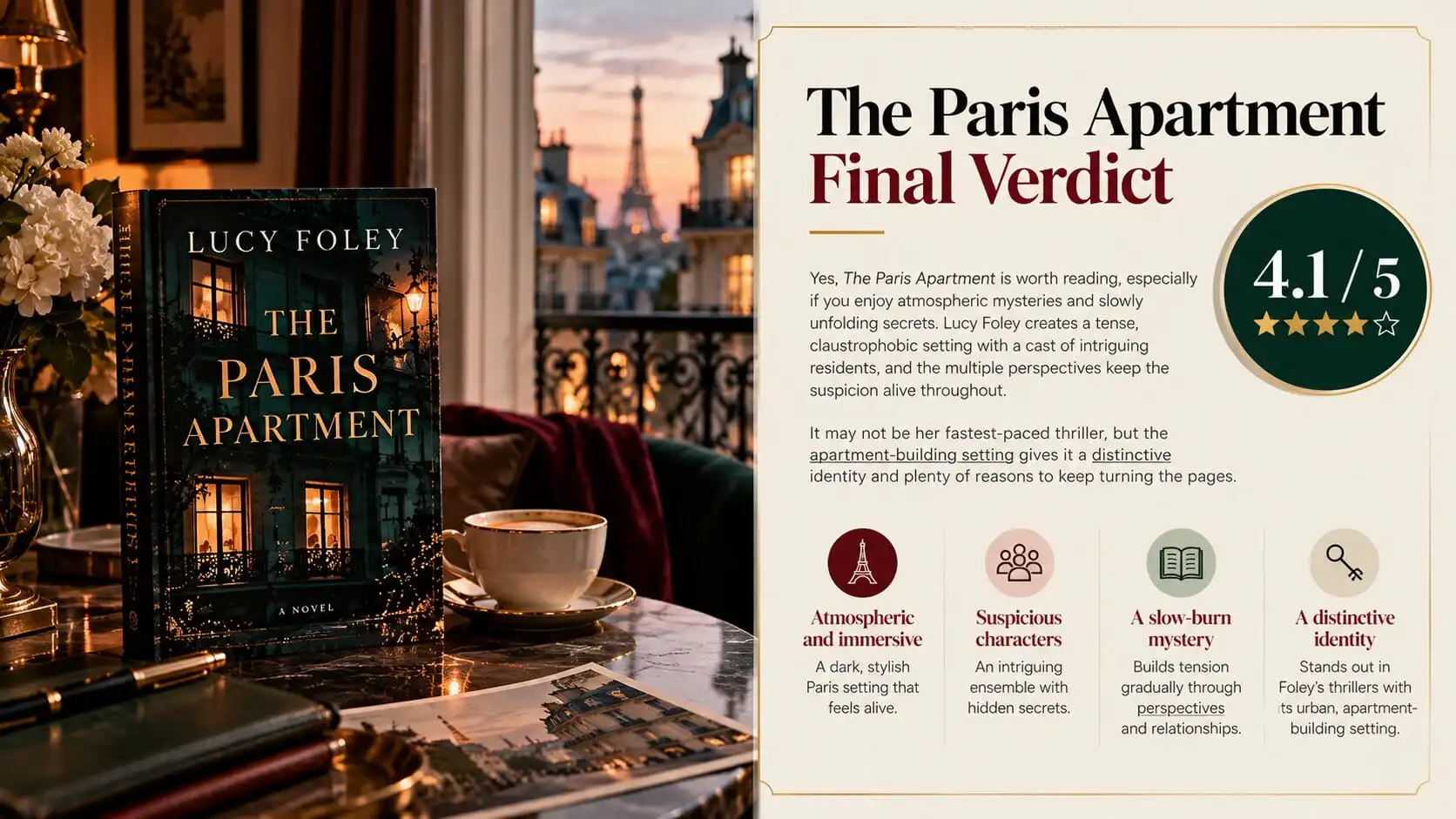
Is The Paris Apartment Worth Reading?
Yes, particularly for readers who enjoy atmosphere and slowly unfolding mysteries. The building gives the novel a distinctive identity, and the gradual exposure of residents’ connections makes its shifting suspicion worthwhile.
It may not be Foley’s fastest thriller, but speed is only one part of the appeal. If you are happy to let the setting and relationships build tension before the revelations accelerate, this is a strong choice.
Rating: 4.1 / 5.
Recommended for its atmosphere, contained setting, and ensemble mystery, with a pacing caveat for readers who want immediate action.
What to Read After The Paris Apartment
Try The Guest List for a more isolated, closed-circle Lucy Foley mystery, or The Hunting Party for snowy isolation and group tension.
For more options beyond those novels, browse Books Like The Guest List and Books Like The Hunting Party.
Choose according to the experience you want next: a suspicious group, a strong contained setting, or an atmosphere that makes everyone feel difficult to trust.
If you are planning to explore more of the author’s work, a Lucy Foley Books in Order guide can help organize your choices. The Paris Apartment is a standalone, so that list is a browsing aid rather than a required sequence.
Final Thoughts
The Paris Apartment is strongest when atmosphere and suspicion work together. Its deliberate pacing gives the residents’ secrets room to develop, although readers who want constant urgency may prefer a faster thriller.
For readers who enjoy ensemble mysteries, the apartment building provides a compelling reason to try it. You do not need to read another Lucy Foley novel first. Pick it up for the mood, the uncertain loyalties, and the gradual discovery of how people sharing one address are connected.
Overall rating: 4.1 / 5.
A distinctive atmospheric mystery for readers comfortable with a slower build.