
How to Build a Reading Habit That Lasts
Most people do not struggle with wanting to read.
They struggle with making reading happen consistently.
You buy books.
You save recommendations.
You tell yourself you will read before bed.
Then work gets busy, your phone wins, and days pass without opening a book.
The problem is usually not motivation.
It is that reading has not been built into your life in a way that is easy to repeat.
A lasting reading habit does not come from forcing yourself to read more.
It comes from making reading:
- easy to start
- easy to continue
- easy to return to after missing a day
- connected to routines you already have
- enjoyable enough that you want to keep going
This guide will help you build that kind of habit.
Quick Answer: How Do You Build a Reading Habit?
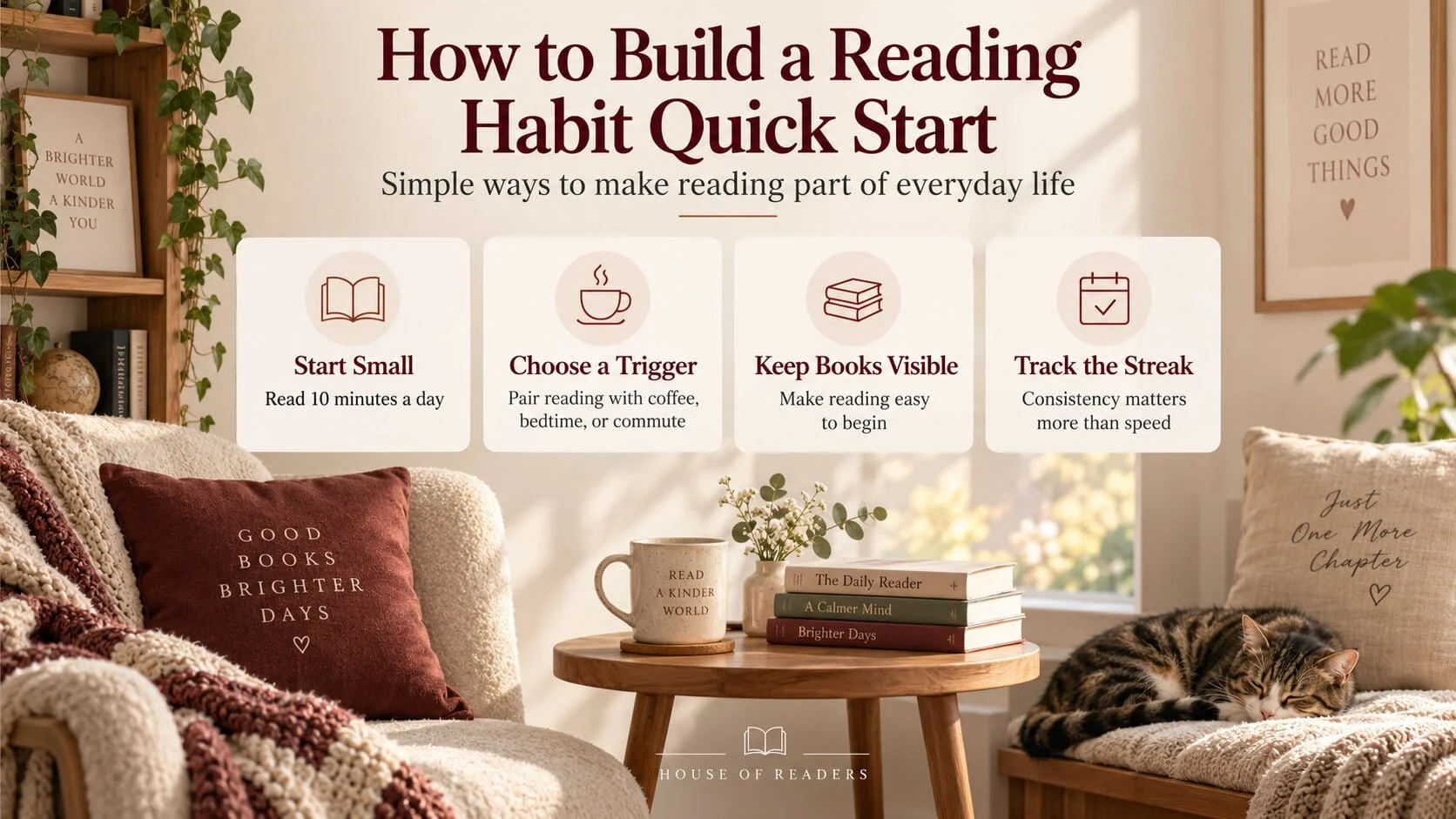
Start small.
Choose a specific time or trigger.
Keep your book visible.
Make the goal easy enough to complete even on busy days.
A simple version looks like this:
- Choose one daily reading trigger.
- Start with 10 minutes.
- Keep your current book within reach.
- Read something you actually enjoy.
- Stop tracking perfection.
- Return quickly when you miss a day.
The goal is not to become someone who reads perfectly every day.
The goal is to become someone who keeps coming back to books.
1. Make Reading Easy to Start
A habit becomes difficult when the first step requires too much effort.
If your book is buried on a shelf, your reading app is hidden, or you still need to decide what to read, you are adding friction.
Reduce it.
Try:
- leaving your book on your pillow
- keeping an ebook open on your phone
- putting a book beside your coffee mug
- keeping one in your bag
- choosing your next book before finishing the current one
The easier it is to begin, the more likely you are to read.
2. Attach Reading to Something You Already Do
One of the simplest ways to make reading consistent is to connect it to an existing routine.
For example:
After I make coffee, I read for 10 minutes.
After I get into bed, I read one chapter.
When I sit down for lunch, I read five pages.
After I finish work, I read before opening social media.
The routine already exists.
You are simply adding reading beside it.
This removes the need to decide when to read every day.
3. Start Smaller Than You Think You Need To
Do not begin with:
I will read one hour every day.
That may work for a few days.
Then life happens.
A better starting point is:
- 5 pages
- 10 minutes
- one short chapter
- one audiobook segment
Small goals work because they are easy to repeat.
And once you start, you will often continue longer anyway.
4. Choose Books That Pull You Back
A reading habit becomes much harder when every book feels like homework.
You do not need to read the most impressive book.
You need to read the book that makes you want to return.
Look for:
- a genre you already enjoy
- short chapters
- strong pacing
- an interesting premise
- an author you trust
- a book that fits your current mood
The best habit-building book is not necessarily the best book ever written.
It is the one you keep opening.
5. Keep Your Current Book Visible
What you see, you remember.
What you hide, you forget.
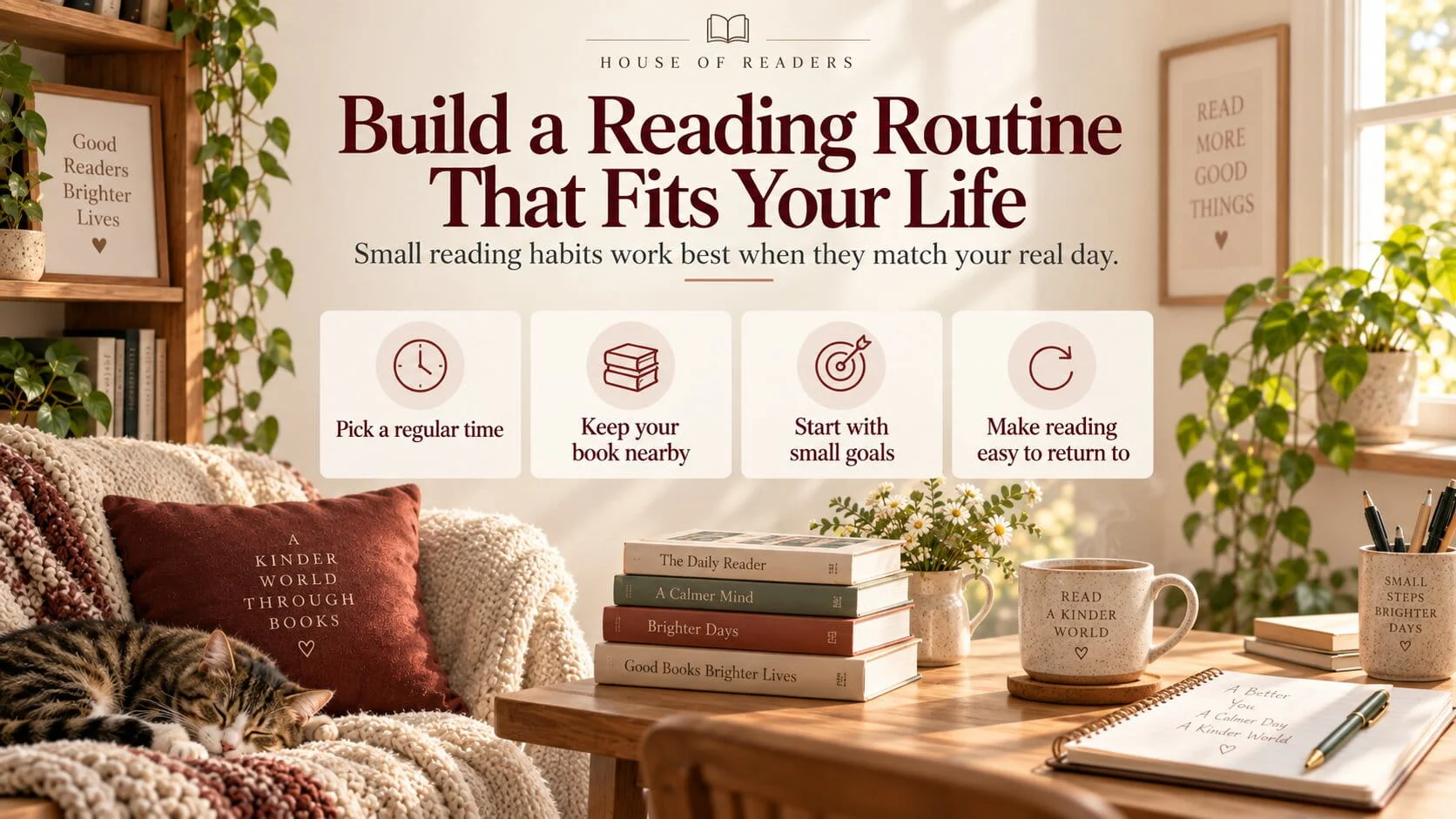
If your current book stays on a shelf, it is easy to go through the day without thinking about reading.
Put it somewhere obvious.
Good places include:
- bedside table
- desk
- sofa
- kitchen counter
- work bag
- coffee table
You are creating a visual reminder without needing another notification.
6. Remove One Competing Distraction
You do not need to redesign your entire life.
Just remove one thing that regularly steals your reading time.
That might mean:
- putting your phone across the room
- turning off one notification
- not opening social media until after reading
- using airplane mode for 15 minutes
- keeping the TV off during your reading window
Reading does not always need more motivation.
Sometimes it simply needs fewer interruptions.
7. Stop Measuring Success Only by Books Finished
Finishing books feels satisfying.
But it is not the only useful measure.
A stronger habit metric is:
Did I show up?
You can track:
- days you read
- minutes read
- chapters read
- reading sessions
- pages read
Do not let the number become more important than the habit.
The purpose of tracking is to help you return, not to make reading feel like work.
8. Have a Minimum Reading Goal
Create a version of reading that is so small you can still do it on difficult days.
For example:
My minimum is two pages.
or:
My minimum is five minutes.
This protects the habit when life is busy.
Some days you may read 40 pages.
Other days you may read two.
Both count.
Consistency becomes much easier when the minimum is realistic.
9. Keep More Than One Format Available
Reading does not have to mean sitting with a physical book.
You can use:
- print books
- ebooks
- audiobooks
Different formats fit different parts of life.
You might read a physical book at night.
Listen to an audiobook while walking.
Open an ebook while waiting somewhere.
This gives your reading habit more opportunities to survive a busy schedule.
10. Create a Small Next-Up List
Do not wait until you finish a book to decide what comes next.
That gap often breaks momentum.
Keep a shortlist of three to five books you would genuinely like to read soon.
For example:
- one fast thriller
- one comfort read
- one longer book
- one wildcard
- one book from an author you trust
When you finish something, your next option is already waiting.
If choosing books is slowing you down, our guide on How to Choose What Book to Read Next can help.
11. Use Reading Streaks Carefully
Streaks can help.
But they can also become a trap.
If you miss one day and immediately think:
I ruined it
then the streak is hurting more than helping.
Instead, use this rule:
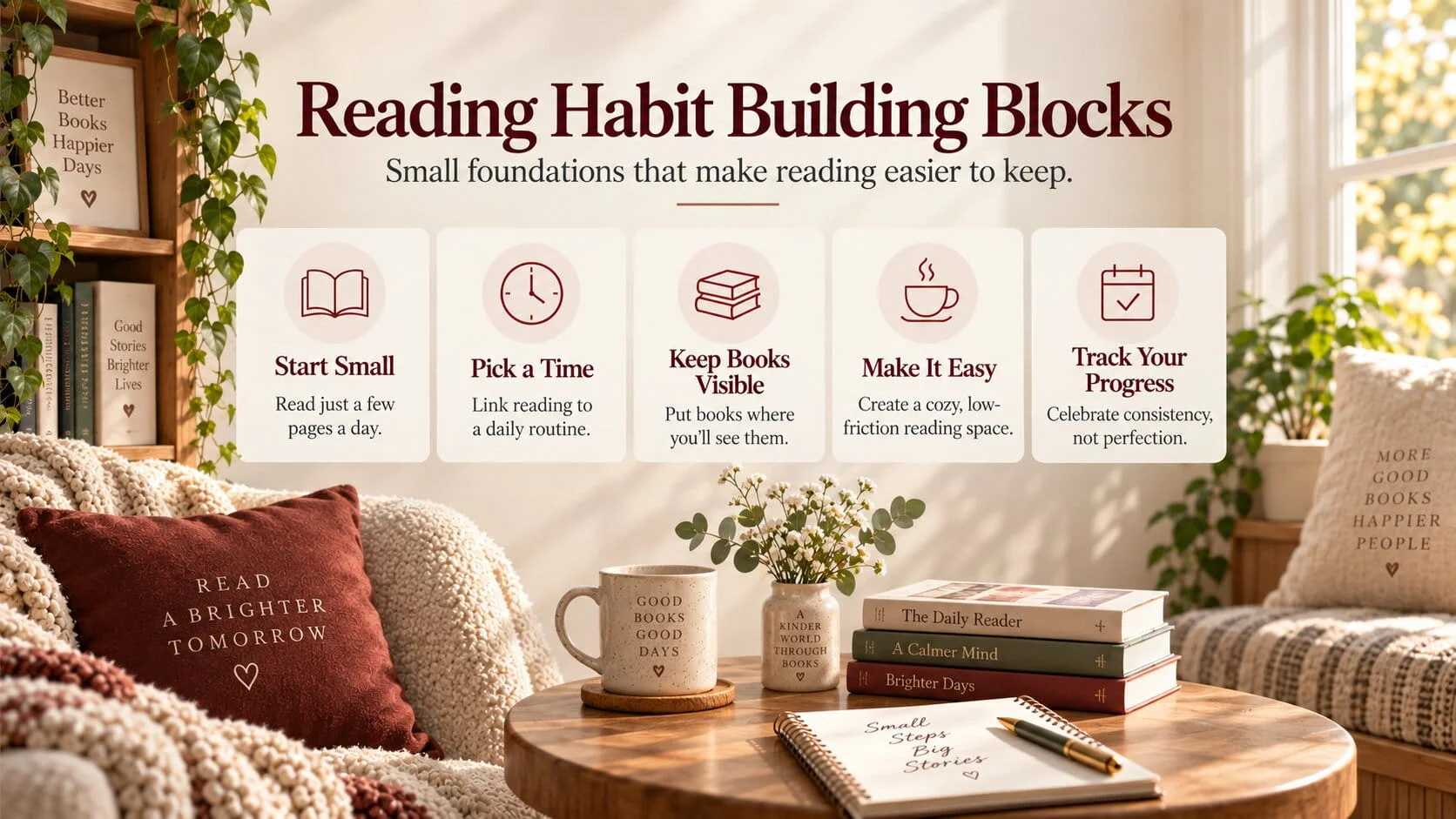
Never miss twice if you can help it.
One missed day is normal.
Two missed days can start becoming a new pattern.
The important part is not maintaining a perfect streak.
It is returning quickly.
12. Make Your Reading Environment Inviting
Your environment affects whether reading feels easy or inconvenient.
You do not need a perfect reading room.
A simple setup is enough.
Try:
- comfortable chair
- good lighting
- blanket
- drink
- phone away
- book already nearby
The goal is to make reading feel like somewhere you want to be.
13. Quit Books That Are Killing the Habit
You are allowed to stop reading a book.
If every reading session feels like a chore, the book may be hurting your habit.
Ask yourself:
Am I avoiding reading, or am I avoiding this book?
Those are very different problems.
Sometimes the best thing you can do for your reading life is choose something else.
14. Match the Book to Your Current Energy
Your reading capacity changes.
After a stressful day, a dense 600-page novel may not be realistic.
Choose based on energy.
Low energy:
- short chapters
- rereads
- thrillers
- novellas
- audiobooks
Higher energy:
- literary fiction
- long fantasy
- complex nonfiction
- slower books
A flexible habit lasts longer than a rigid one.
15. Protect a Small Reading Window
You do not need hours.
Even 15 protected minutes can matter.
Choose one period when reading gets priority.
For example:
10:00 to 10:15 PM
During that time:
- no email
- no social media
- no browsing
- no deciding what to read
Just reading.
Small protected windows add up surprisingly quickly.
16. Use Momentum After a Great Book
One of the easiest moments to keep reading is immediately after finishing something you loved.
Do not wait too long.
Start your next book while the reading momentum is still there.
Even one chapter is enough.
This turns one enjoyable book into the beginning of another reading cycle.
17. Build an Identity, Not Just a Target
Instead of telling yourself:
I need to read 30 books this year
try:
I am someone who makes time for reading.
Targets can motivate you.
Identity makes the habit easier to maintain.
You begin making small decisions that match the kind of reader you want to be.
What If You Keep Falling Out of the Habit?
That is normal.
A reading habit does not disappear because you stopped for a week.
Do not restart with an ambitious plan.
Restart with the smallest version possible.
Tonight:
Read five pages.
Tomorrow:
Read again.
That is enough.
The faster you remove the guilt around restarting, the easier reading becomes.
What If You Are Too Busy to Read?
Look for small unused spaces rather than waiting for a perfect hour.
You may have:
- 10 minutes before work
- 15 minutes during lunch
- 20 minutes before bed
- commute time for audiobooks
- waiting time during appointments
A reading habit does not require huge blocks of free time.
It requires repeated opportunities.
What If You Keep Reaching for Your Phone?
Make the phone slightly harder to access and the book slightly easier.
For example:
Phone on the other side of the room.
Book beside you.
That tiny difference matters.
You can also make a simple rule:
Read 10 minutes before scrolling.
You are not banning your phone.
You are changing the order.
What If You Cannot Find Books You Enjoy?
Your habit may not be the real issue.
You may simply need better book selection.
Start by choosing based on mood and reading experience rather than popularity.
Our guide:
How to Choose What Book to Read Next
And if you are returning after a long break:
How to Get Back Into Reading: 15 Simple Tips That Work
A Simple 7-Day Reading Habit Reset
If you want to start immediately, try this.
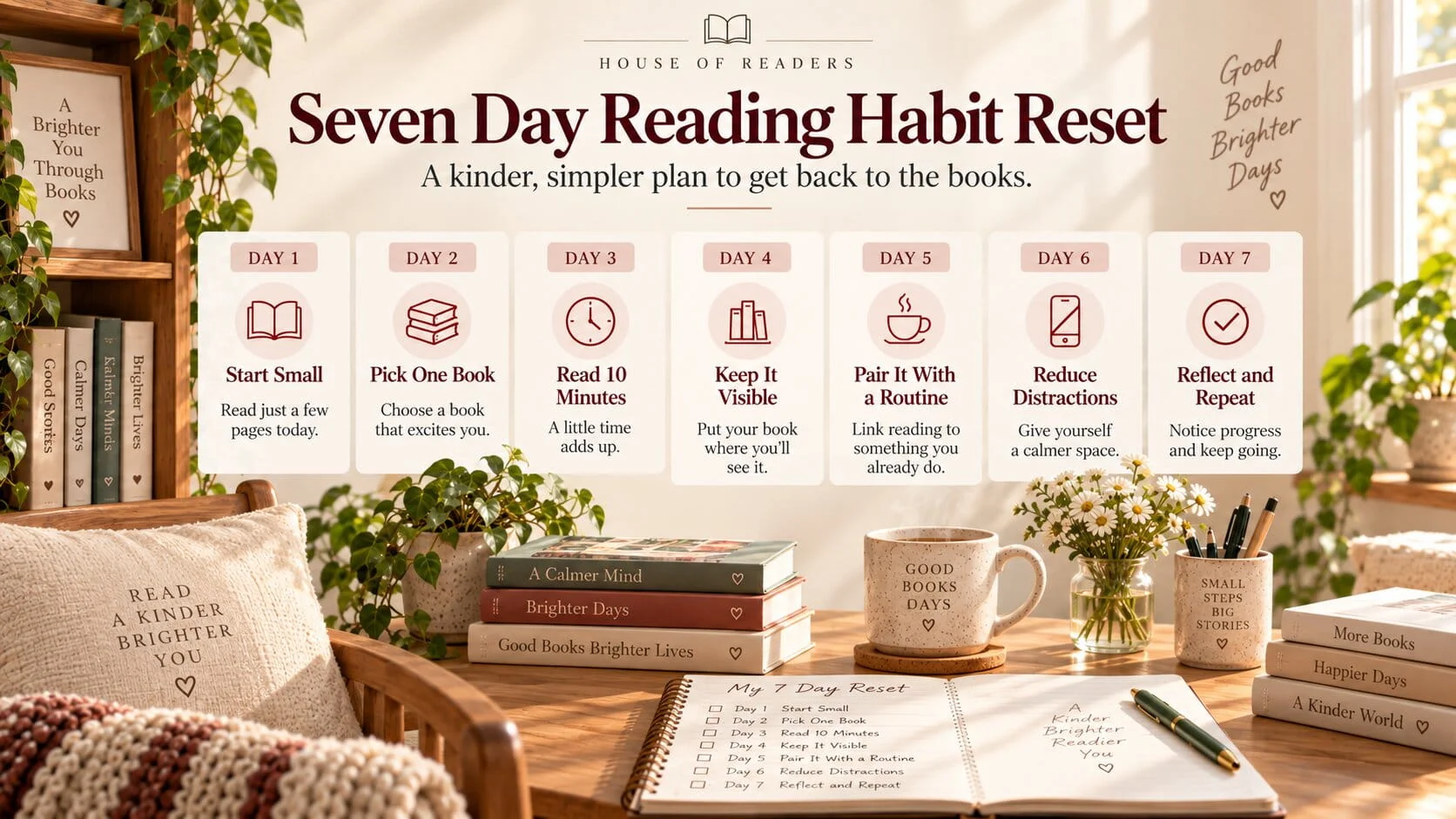
Day 1
Choose one book and read for 10 minutes.
Day 2
Read at the same time again.
Day 3
Move your phone away during reading.
Day 4
Leave your book somewhere visible.
Day 5
Read one chapter instead of tracking minutes.
Day 6
Choose your next book before finishing the current one.
Day 7
Review what made reading easiest and keep only those parts.
You do not need to build the perfect routine in seven days.
You are simply discovering what works.
The Best Reading Habit Is the One You Can Return To
There will be weeks when you read every day.
There will be weeks when you barely read.
That does not mean the habit failed.
A sustainable reading habit should survive:
- busy periods
- travel
- work stress
- reading slumps
- unfinished books
- missed days
The real skill is not perfect consistency.
It is knowing how to return.
Final Thoughts
A lasting reading habit is built through simplicity.
Choose a time.
Make the goal small.
Keep books visible.
Read what genuinely interests you.
Remove unnecessary friction.
And when you stop for a while, restart without turning it into a big event.
You do not need to become a different person overnight.
You only need to make reading slightly easier to choose today than it was yesterday.
Do that often enough, and reading starts becoming part of your life rather than another goal you are trying to maintain.