A luxury wedding on a remote island.
A carefully selected guest list.
Old friendships, hidden resentments, family tension, and a storm closing in.
Then someone dies.
Lucy Foley’s The Guest List takes a glamorous celebration and turns it into a tense closed-circle mystery where almost everyone seems to have something to hide.
If you are wondering whether the book lives up to its reputation, this spoiler-light The Guest List review looks at the atmosphere, characters, pacing, mystery, strengths, weaknesses, and who is most likely to enjoy it.
Quick Verdict
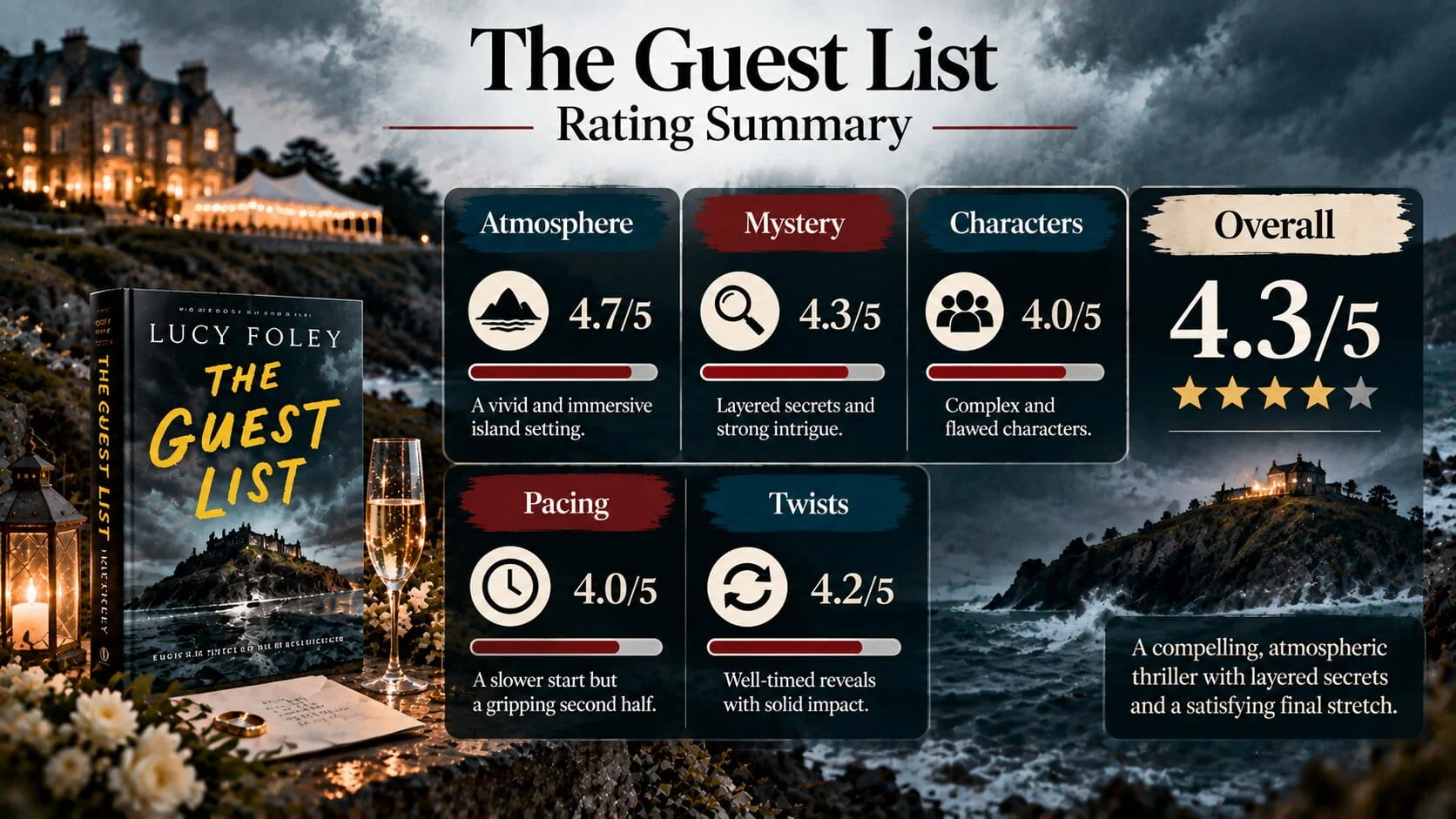
House of Readers Rating: 4.3/5
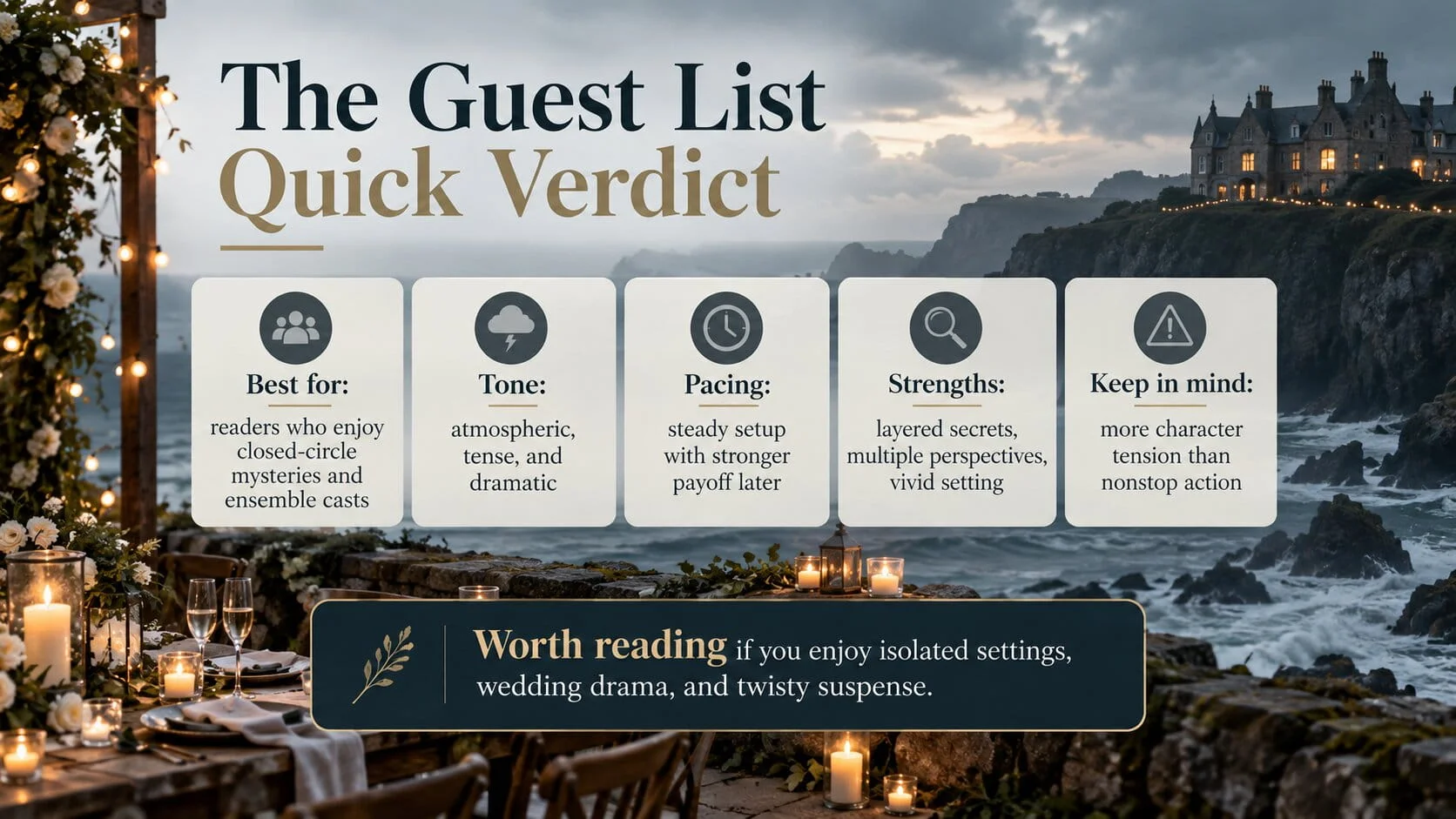
The Guest List is a strong atmospheric mystery built around a remote setting, multiple perspectives, buried secrets, and a carefully controlled suspect pool.
Its biggest strengths are:
- the isolated island setting
- steadily increasing tension
- multiple suspicious characters
- strong social and relationship conflict
- short perspective shifts that keep the story moving
- a satisfying web of secrets
Its main weaknesses are:
- several characters are intentionally difficult to like
- the opening is slower than the final stretch
- some connections may feel slightly too convenient
- readers who want immediate action may need patience
Overall, it works especially well for readers who enjoy closed-circle mysteries, destination thrillers, tense group dynamics, and books where the setting matters almost as much as the crime.
What Is The Guest List About?
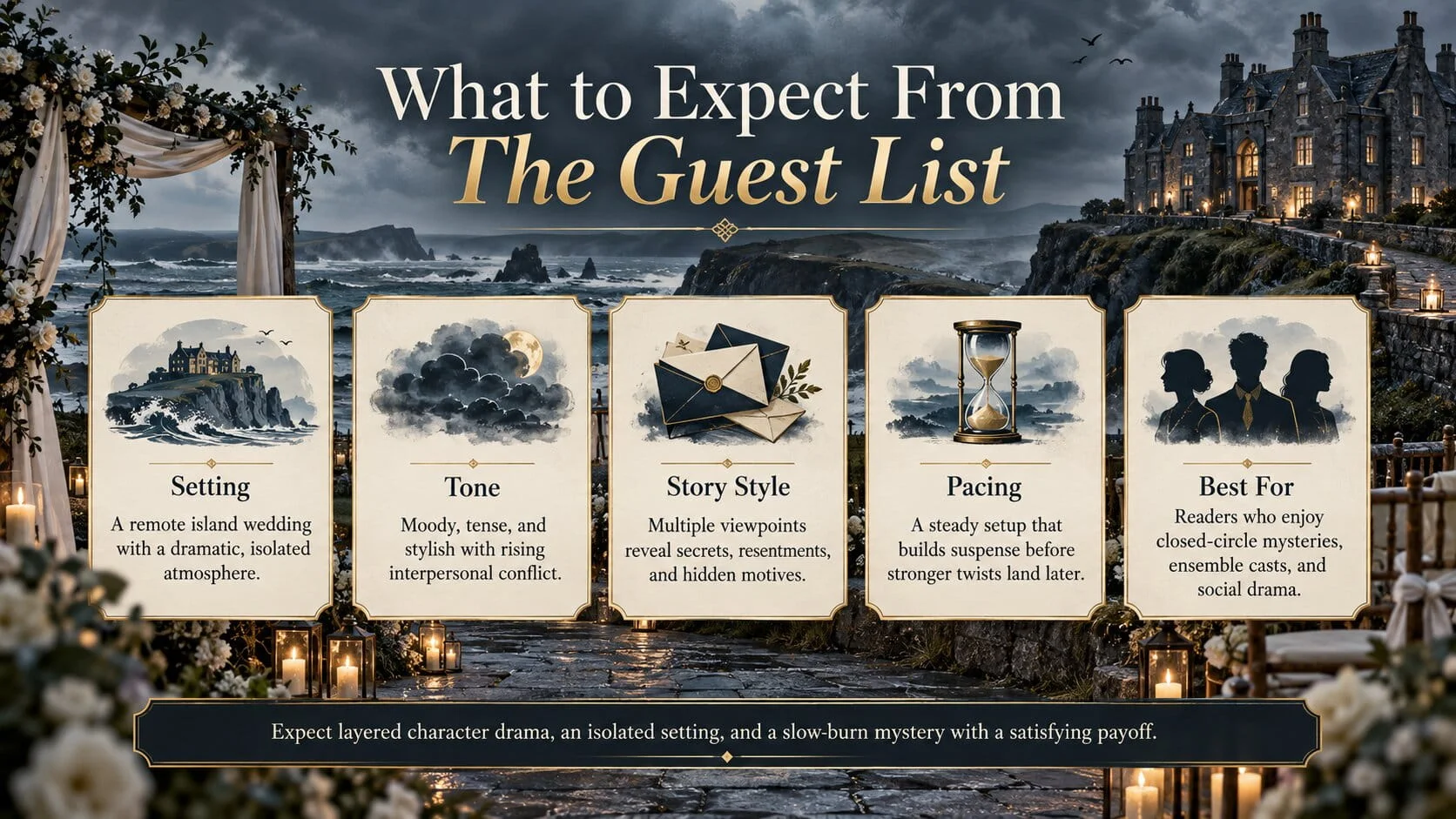
The story centers on the wedding of Jules and Will, a high-profile couple celebrating on a remote island off the coast of Ireland.
The location is dramatic and isolated.
The wedding is stylish.
The guest list is carefully chosen.
But the people arriving on the island bring old grudges, complicated histories, jealousies, insecurities, and secrets with them.
As the weather worsens and tensions rise, the celebration begins to feel less like a wedding and more like a pressure cooker.
Then a body is discovered.
From there, the novel asks two questions at the same time:
Who died?
And:
Who had a reason to want them dead?
One of the clever choices Foley makes is delaying some of those answers while gradually revealing the relationships between the guests.
The Remote Island Setting Is One of the Book’s Biggest Strengths
The setting does a lot of work.
The island is beautiful, but it never feels entirely welcoming.
There is rough weather.
Poor communication.
Limited escape routes.
A sense that once the guests arrive, they are stuck with one another.
That isolation gives the mystery a classic closed-circle feel.
The wedding itself also creates a useful contrast.
Everything is supposed to be elegant, controlled, and celebratory.
Underneath that polished surface, the relationships are much messier.
That contrast gives the novel much of its tension.
The Multiple Perspectives Work Well
The story moves between several characters rather than following one narrator from beginning to end.
That structure is important because almost everyone sees the wedding differently.
Some characters are proud.
Some are insecure.
Some are angry.
Some are hiding things.
By moving between perspectives, Foley gives the reader pieces of information without showing the entire picture at once.
This works especially well in a mystery where suspicion needs to keep moving.
A person who seems sympathetic in one chapter may look much more complicated when another character describes them.
The approach also helps the book maintain momentum because the chapters tend to be short and focused.
The Characters Are Complicated Rather Than Comfortable
This is not a book full of people you are expected to love.
Many of the characters are selfish, insecure, competitive, dishonest, or emotionally messy.
That may frustrate readers who want a clear character to root for.
But it fits the story.
The wedding brings together people whose relationships contain years of history.
Old friendships are not as healthy as they first appear.
Family relationships are strained.
Status matters.
Money matters.
Appearances matter.
That gives the mystery more possibilities because there are several believable sources of resentment.
The Wedding Setting Creates Constant Social Tension
A wedding is a useful setting for this kind of thriller because people are expected to behave.
They are expected to smile.
They are expected to celebrate.
They are expected to avoid making scenes.
That means anger and resentment often stay hidden until they cannot anymore.
Foley uses that tension effectively.
Small conversations feel uncomfortable.
Old jokes become cruel.
Memories reveal more than expected.
People drink too much.
The pressure slowly builds.
The novel is at its best when the polished wedding atmosphere and the ugly personal history underneath it begin to collide.
Is The Guest List Scary?
Not in the traditional horror sense.
The tension comes more from:
- isolation
- suspicion
- social conflict
- secrets
- bad weather
- uncertainty about who can be trusted
There are darker moments, but this is primarily a mystery thriller rather than a horror novel.
Readers looking for psychological tension will probably find more to enjoy here than readers looking for graphic fear or supernatural horror.
Is The Guest List Fast Paced?
Eventually, yes.
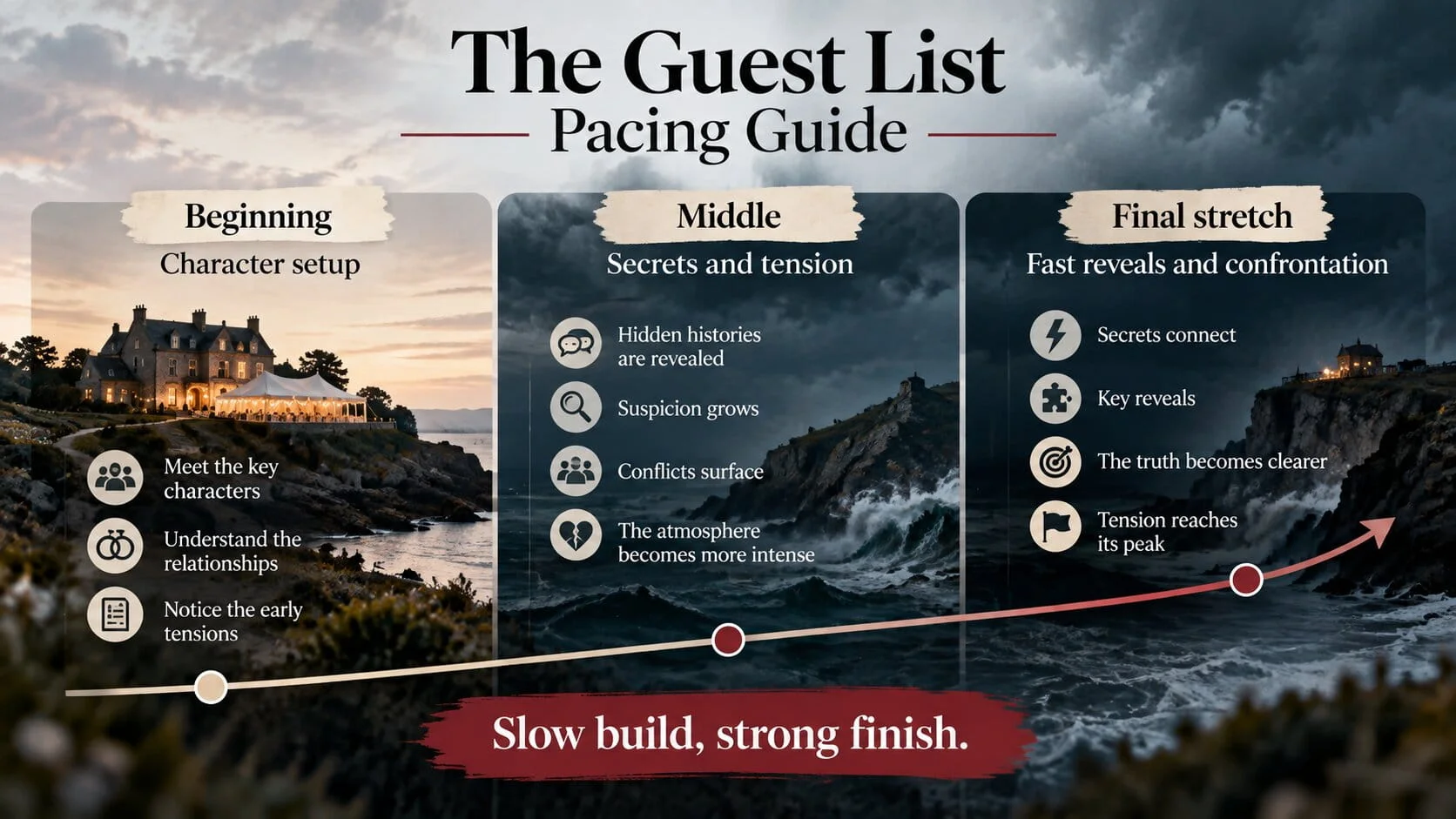
The opening is more about setup.
You meet the characters.
You learn the relationships.
You begin noticing the resentments.
The mystery becomes much more urgent as the wedding progresses.
Once the secrets start connecting, the pacing becomes noticeably faster.
The short chapters and changing narrators help.
If you prefer thrillers that begin with immediate action, the first portion may feel slower.
If you enjoy mysteries that build tension gradually, the pacing works well.
How Strong Is the Mystery?
The mystery works because the book does not rely on only one question.
You are not simply asking who committed a crime.
You are also trying to understand:
- who is telling the truth
- which relationships matter
- which secrets connect
- who has a genuine motive
- which details are distractions
- what happened before the wedding
That layered structure gives the book enough moving pieces to stay interesting.
Some readers may anticipate individual reveals before the characters do.
But the overall construction is effective because several threads come together in the final portion.
Are the Twists Good?
Mostly, yes.
The strongest twists are the ones tied to character history rather than random surprise.
The book gradually reveals why certain people are angry, afraid, embarrassed, or defensive.
Those revelations make earlier interactions feel different in retrospect.
Not every reveal is equally surprising.
A few connections may feel a little neat.
But the final stretch has enough momentum that the book remains satisfying even if you predict one or two elements early.
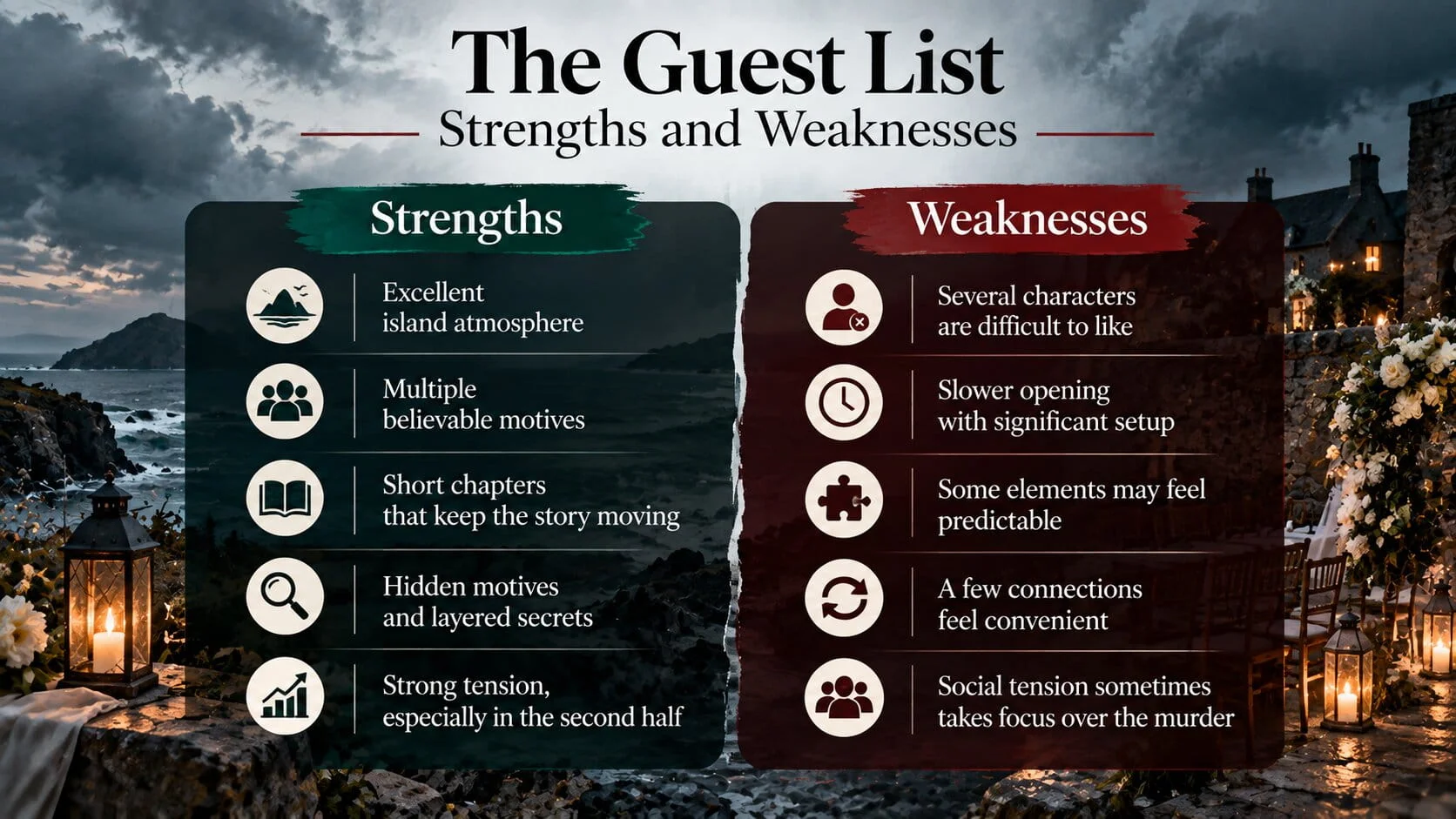
The Guest List Strengths and Weaknesses
Strengths
- excellent isolated setting
- strong wedding atmosphere
- multiple believable motives
- short chapters
- effective use of multiple narrators
- layered character secrets
- increasingly tense second half
- strong closed-circle structure
Weaknesses
- several characters are difficult to like
- the beginning spends significant time on setup
- some coincidences feel convenient
- certain readers may predict parts of the mystery
- the social tension can feel more important than the murder for long stretches
Who Should Read The Guest List?
You are likely to enjoy it if you like:
- closed-circle mysteries
- remote settings
- wedding thrillers
- multiple narrators
- complicated friendship groups
- secrets from the past
- atmospheric suspense
- Agatha Christie-style suspect pools
- Ruth Ware-style isolation mysteries
If you enjoyed One by One by Ruth Ware, the isolated group dynamics here should feel familiar.
Read our One by One Review: Is Ruth Ware’s Snowy Thriller Worth Reading? for another remote-group mystery.
You can also explore Books Like One by One: 12 Isolated Thrillers to Read Next for more books built around isolation, suspicion, and limited suspects.
Who Might Not Enjoy It?
You may want to skip it if you strongly prefer:
- one central narrator
- immediately likeable characters
- nonstop action from the first chapter
- highly procedural detective stories
- mysteries with minimal relationship drama
A large part of the suspense comes from character relationships.
If interpersonal conflict does not interest you, some sections may feel slow.
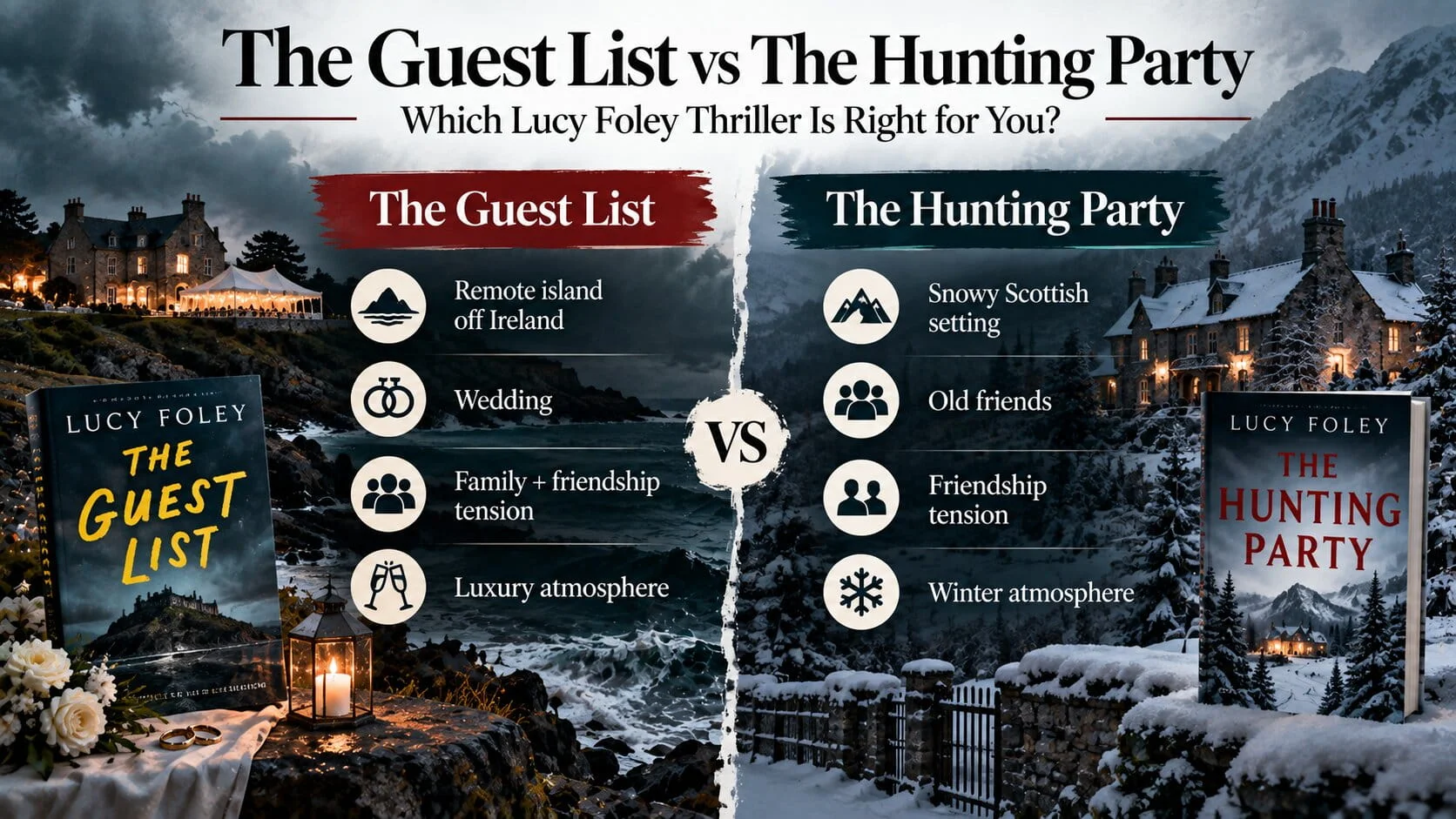
The Guest List vs The Hunting Party
These books are often compared because both use:
- isolated settings
- group tension
- old relationships
- multiple perspectives
- murder within a limited suspect pool
But the mood is different.
The Guest List
- remote island
- luxury wedding
- wider mix of family and friendship tension
- polished public image vs private resentment
- more event-driven structure
The Hunting Party
- snowy Scottish setting
- long-term friendship group
- winter isolation
- stronger focus on friendship history
- colder, more enclosed atmosphere
If the wedding setting sounds more appealing, start with The Guest List.
If you want snow and friendship tension, The Hunting Party may suit you better.
For the full author reading order, see our Lucy Foley Books in Order: Complete Reading Guide.
What I Liked Most About The Guest List
The setting is probably the book’s strongest feature.
The island creates immediate separation from normal life.
The wedding gives everyone a reason to be in the same place.
The weather removes some of the feeling that anyone can simply leave.
Then Foley fills that controlled environment with characters who have unresolved history.
The result is a mystery where the tension often exists before the crime itself becomes the main focus.
I also liked how the short perspective changes keep suspicion moving.
You rarely stay with one character long enough to become completely comfortable with their version of events.
What Could Have Been Better?
The setup could be tighter.
The character introductions are necessary, but some readers may feel that the book takes a while to reach its strongest section.
A few characters are also so deliberately unpleasant that spending time in their perspective can be uncomfortable rather than compelling.
And while the connections between the characters create satisfying reveals, some of them are convenient enough to remind you that you are reading a constructed mystery.
None of these issues ruined the book for me.
They simply keep it from being a perfect thriller.
Is The Guest List Worth Reading?
Yes, especially if atmosphere and group tension matter to you.
This is not the kind of thriller that depends entirely on one enormous twist.
Its strength comes from the combination of:
- remote setting
- suspicious characters
- old grudges
- changing perspectives
- social pressure
- gradual reveals
The final portion rewards the slower setup.
For readers who enjoy destination mysteries and closed-circle structures, The Guest List is an easy recommendation.

Final Verdict
House of Readers Rating: 4.3/5
The Guest List succeeds because it turns a glamorous wedding into a tightly controlled environment full of resentment and suspicion.
The remote island works.
The multiple narrators work.
The secrets gradually connect.
And the final stretch gives the story the momentum it needs.
The opening could move faster, and some characters are intentionally difficult to spend time with.
But if you like atmospheric mysteries where almost everyone has a motive, this is one of Lucy Foley’s strongest entry points.
For readers new to Foley, The Guest List is a very reasonable place to start.